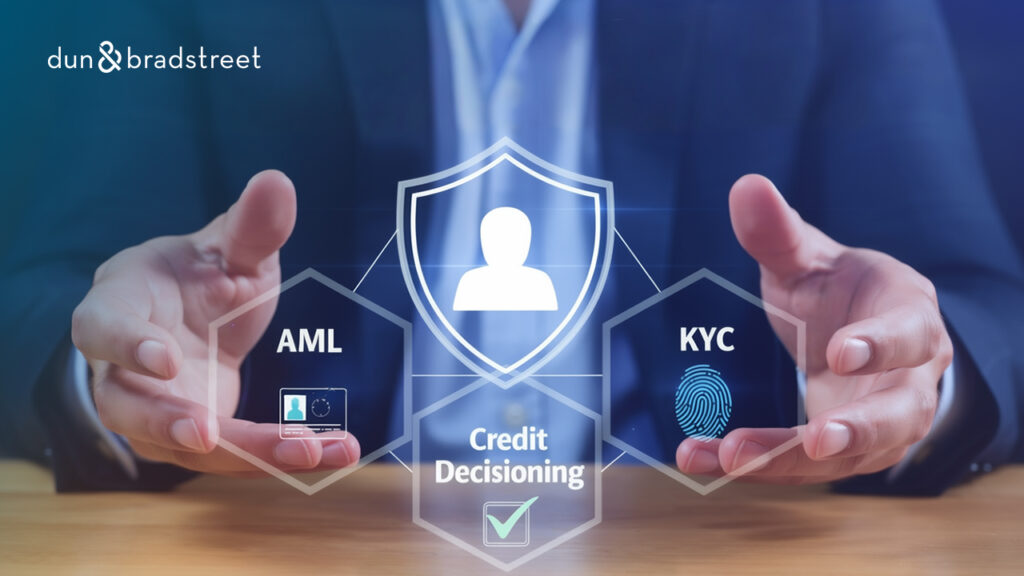

The UAE’s position as a global trade, finance, and investment hub brings opportunity, but it also raises the stakes for risk management. As regulatory expectations increase and financial crime grows more sophisticated, organizations can no longer treat compliance and credit decisions as separate functions. In today’s environment, AML, KYC, and credit decisioning must operate together to support safer B2B transactions, protect cash flow, and maintain regulatory confidence.
Across the UAE, regulators are reinforcing frameworks that demand stronger transparency, better due diligence, and more accountable business relationships. This shift reflects a broader move toward data-driven oversight, where decisions are expected to be supported by verified information rather than assumptions or incomplete checks.
Why Risk Management in the UAE Requires an Integrated Approach
Businesses operating in the UAE face a unique convergence of risks. Complex ownership structures, cross-border trade flows, and fast-moving supply chains can obscure exposure if controls are fragmented. At the same time, AML and KYC regulations, economic substance requirements, and Ultimate Beneficial Ownership disclosure rules are raising the bar for how organizations assess counterparties.
Credit risk cannot be evaluated in isolation from compliance risk. A counterparty that appears financially sound may still pose significant exposure if it has opaque ownership, adverse regulatory history, or links to high-risk jurisdictions. This is why integrating AML KYC and credit decisioning has become central to modern risk frameworks in the UAE.
Roles of AML KYC and Credit Decisioning
AML and KYC processes are designed to establish trust. They verify who an organization is, who controls it, and whether it presents exposure to money laundering, sanctions, or other financial crimes. These checks are foundational for meeting UAE AML and CFT obligations and for protecting institutions from regulatory penalties.
Credit decisioning, on the other hand, focuses on financial reliability. It evaluates a company’s ability and willingness to meet its payment obligations, drawing on indicators such as payment behavior, financial stability, and operational history.
When these two disciplines operate independently, gaps emerge. AML KYC may confirm identity but miss deteriorating financial behavior. Credit decisioning may approve a transaction without visibility into compliance red flags. Together, AML KYC and credit decisioning provide a more complete risk picture.
Regulatory Context Driving Integration in the UAE
The UAE has made significant progress in strengthening its compliance ecosystem. Enhanced AML/CFT regulations, stricter enforcement, and ongoing alignment with international standards have increased accountability across financial and non-financial sectors.
UBO compliance requirements now demand clear visibility into beneficial owners, reducing the ability to hide behind layered corporate structures. Economic substance regulations reinforce the need for genuine operational presence, particularly for entities engaged in cross-border activity.
These measures create a strong case for integrating AML, KYC, and credit decisioning. Regulators increasingly expect organizations to demonstrate not only that checks were performed, but that decisions were informed by accurate, current, and comprehensive data.
Operational Pain Points When Compliance and Credit Are Disconnected
Many organizations still rely on siloed processes. Compliance teams conduct onboarding checks, while finance or procurement teams assess creditworthiness using separate data sources. This fragmentation can result in inconsistent decisions and delayed responses to emerging risks.
A common challenge is outdated information. A counterparty may pass initial KYC checks, but changes in ownership, regulatory status, or payment behavior can quickly alter its risk profile. Without ongoing monitoring that connects compliance and credit data, exposure can persist unnoticed.
Manual processes also increase the burden on teams. Duplicate data entry, repeated reviews, and inconsistent documentation make it harder to scale operations while maintaining audit readiness.
How Integrated AML KYC and Credit Decisioning Reduce Risk
When AML KYC and credit decisioning work together, organizations gain a multidimensional view of counterparties. Identity verification, ownership transparency, and sanctions screening are assessed alongside financial performance and payment behavior.
This integration supports better prioritization. High-risk entities can be flagged early, allowing organizations to adjust credit terms, enhance monitoring, or decline transactions before losses occur. Lower-risk entities can move through approval processes more efficiently, improving operational agility.
In the context of B2B transactions, this approach strengthens trust across supply chains. Procurement teams can onboard suppliers with greater confidence, while finance teams can extend credit based on a clearer understanding of both compliance and financial risk.
The Role of Data and Analytics in Safer B2B Transactions
Data quality underpins effective integration. Reliable, verified business information enables organizations to connect compliance insights with credit indicators in a single decision framework. Advanced analytics help surface patterns that may not be visible through manual review alone.
For example, linking adverse media signals with declining payment behavior can reveal emerging risks earlier. Similarly, ownership changes combined with shifts in trade activity may warrant closer scrutiny under UAE AML guidelines.
In a market moving rapidly toward digital transformation, automated workflows and continuous monitoring are becoming essential. They reduce reliance on point-in-time checks and support dynamic risk management aligned with regulatory expectations.
The Contribution of Dun & Bradstreet to Integrated Risk Decisions
In an environment where trust and transparency are critical, access to authoritative data plays a defining role. Dun & Bradstreet supports the intersection of AML, KYC, and credit decisioning by providing consistent, verified insights into business identity, ownership, and financial behavior.
By enabling organizations to connect due diligence with credit assessment, D&B helps reduce blind spots that can undermine B2B relationships. This approach aligns with the UAE’s broader push toward data-driven governance and risk resilience, without positioning compliance as a barrier to growth.
Conclusion
As the UAE continues to modernize its regulatory and economic landscape, organizations will face increasing expectations to demonstrate robust, integrated risk management. AML KYC and credit decisioning will remain central to this evolution, supporting safer transactions and stronger market confidence.
Within the broader GCC risk ecosystem, Dun & Bradstreet plays a critical role by enabling organizations to align compliance obligations with informed credit decisions. By bringing together transparency, analytics, and trusted data, integrated risk frameworks will continue to shape how businesses reduce exposure and build sustainable partnerships across the region.