Hand block printing is a centuries-old textile art that transforms simple fabric into a canvas of culture, craftsmanship, and creativity. Rooted deeply in Indian heritage, this meticulous process celebrates the human touch at every stage—from carving wooden blocks to imprinting intricate patterns on fabric. We explore the complete journey of
hand block printing, revealing how raw wood and plain cloth come together to create timeless textiles.
The Origins of Hand Block Printing
Hand block printing traces its history back thousands of years, flourishing in regions like Rajasthan, Gujarat, and Andhra Pradesh. Communities of skilled artisans passed down techniques through generations, preserving not just a craft but a cultural identity. Each printed fabric carries stories of tradition, nature, and regional aesthetics.
Step 1: Designing the Pattern
The journey begins with
pattern creation. Artisans draw designs inspired by flora, fauna, geometry, and traditional motifs. These designs are carefully planned to ensure symmetry and repetition, which are essential for seamless printing.
Every motif is thoughtfully scaled and aligned, as even the smallest detail impacts the final appearance of the fabric.
Step 2: Carving the Wooden Blocks
Once the design is finalized, it is transferred onto seasoned wood, usually teak or sheesham, known for durability and fine grain. Skilled block carvers meticulously
hand-carve the design using chisels and small tools.
- Separate blocks are created for each color in the design
- Fine holes are drilled to allow air circulation and even dye absorption
- A single design may require multiple blocks
This stage demands exceptional precision, as the block defines the clarity and beauty of the print.
Step 3: Preparing the Fabric
Before printing, the fabric—often cotton or linen—undergoes thorough preparation. It is
washed, bleached, and softened to remove starch, oils, or impurities. This ensures better dye absorption and long-lasting color.
In many traditional practices, the fabric is also treated with natural solutions to enhance color vibrancy and durability.
Step 4: Mixing Natural and Pigment Dyes
Colors play a vital role in hand block printing. Dyes are prepared using
natural sources such as indigo, turmeric, madder root, and pomegranate peel, or eco-friendly pigment dyes.
Each color is mixed carefully to achieve the desired shade and consistency. The dye is poured into shallow trays lined with soft fabric, allowing the block to pick up color evenly.
Step 5: The Printing Process
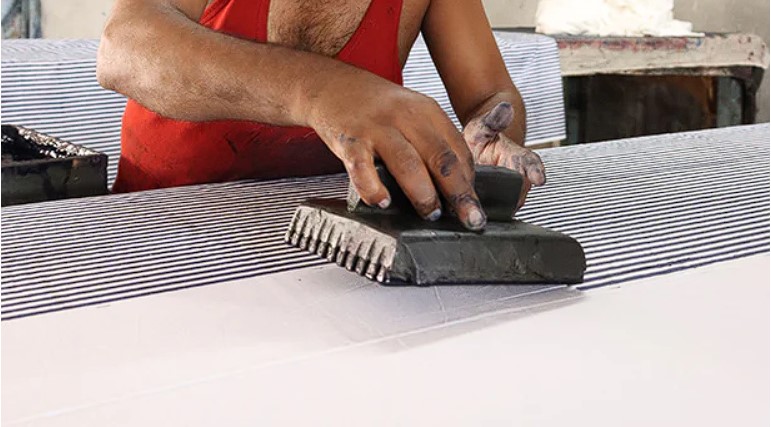
This is where the magic truly happens. The artisan dips the wooden block into the dye tray and presses it firmly onto the fabric with practiced precision.
- Blocks are aligned by eye, without mechanical guides
- Consistent pressure ensures uniform prints
- The rhythmic movement creates seamless patterns
This step requires patience, skill, and years of experience. Minor variations in pressure or alignment make every piece
uniquely handcrafted, distinguishing it from machine prints.
Step 6: Layering Colors and Motifs
For multi-colored designs, the fabric is left to dry between layers. Each color is printed separately using its corresponding block. The process may be repeated several times, building depth and complexity in the design.
This layered approach adds richness, character, and dimension to the fabric.
Step 7: Drying and Fixing the Colors
After printing, the fabric is dried naturally in the sun. Sun-drying helps set the colors gently and evenly. The fabric is then washed again to remove excess dye and fix the colors permanently.
Some techniques involve additional treatments like steaming or boiling, depending on the dye used.
Step 8: Final Washing and Finishing
The last stage includes
thorough washing, softening, and ironing. This enhances the fabric’s texture, making it ready for use in garments, home décor, or accessories.
The result is a beautifully printed textile that reflects authenticity, craftsmanship, and timeless appeal.
Why Hand Block Printing Stands Apart
Hand block printing is more than a production process—it is an art form. Unlike mass-produced textiles, each piece carries subtle imperfections that highlight its handmade nature. These variations are celebrated as marks of originality and human skill.
Additionally, the process supports:
- Sustainable and eco-friendly practices
- Artisan livelihoods and traditional crafts
- Slow fashion and conscious consumption
The Journey from Wood to Fabric
From carefully carved wooden blocks to intricately printed fabric, hand block printing is a testament to patience, heritage, and artistry. Every step honors tradition while creating textiles that remain relevant in modern fashion and interiors.
By choosing hand block printed fabrics, we embrace stories woven by hands, shaped by culture, and printed with purpose—making each piece truly one of a kind.