
Lithuania, a scenic Baltic country in Northern Europe, is a land of rich history, diverse landscapes, and cultural treasures. Covering a total land area of 65,300 km² (25,212 mi²) and an exclusive economic zone (EEZ) of 7,031 km² (2,715 mi²), Lithuania’s total area reaches approximately 72,331 km² (27,927 mi²) including its continental shelf. Its moderate size, combined with varied natural features, makes it a fascinating destination for travelers looking to experience both outdoor adventures and cultural heritage.
Borders and Neighbors
Lithuania shares its land borders with four countries: Belarus (502 km), Latvia (453 km), Poland (91 km), and Russia (227 km). The total border length is 1,549 km (598 mi), which makes Lithuania well-connected for cross-border trips while maintaining its calm, welcoming atmosphere. Lithuania is not landlocked, and its waterways, including rivers and small lakes, connect the country to the Baltic Sea, offering picturesque coastal areas and opportunities for water-based activities.
Cities and Culture
The capital and largest city, Vilnius, is a vibrant hub of culture, art, and history. Its UNESCO-listed old town features cobblestone streets, centuries-old churches, and colorful townhouses. Beyond Vilnius, Kaunas, the second largest city, offers a lively cultural scene, riverside promenades, and interwar architecture. Klaipėda, located near the Baltic coast, is known for its maritime heritage, festivals, and access to the famous Curonian Spit. Smaller towns and rural villages showcase traditional Lithuanian crafts, local cuisine, and customs, giving travelers a genuine taste of the country’s heritage.
Landscape and Elevation
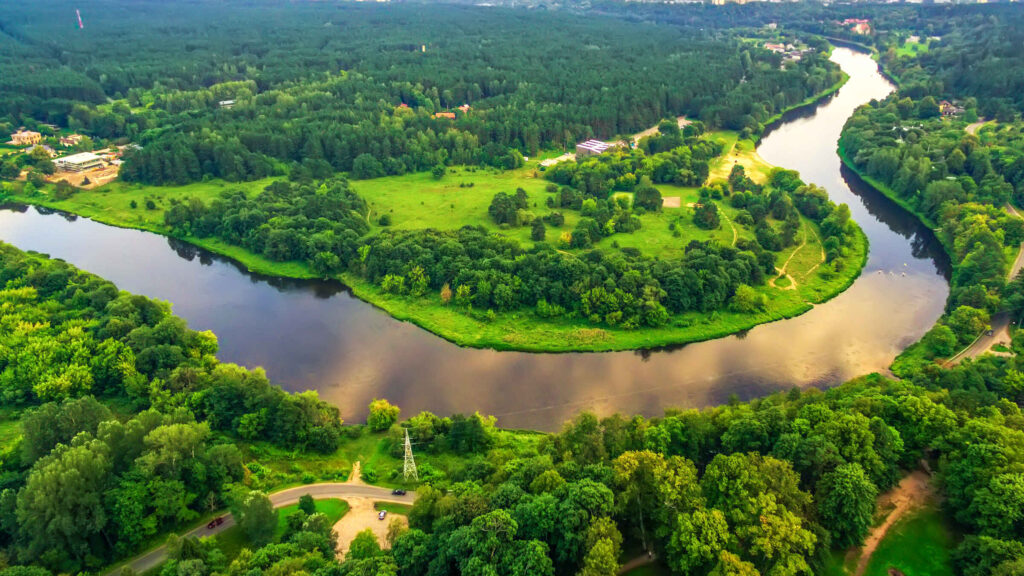
Lithuania’s terrain is largely flat with gentle hills, creating a peaceful landscape perfect for cycling, hiking, and outdoor exploration. The average elevation is 110 m (361 ft), with the highest point being Aukštojas Hill at 294 m (965 ft) and the lowest point at the Nemunas River, lying 5 m below sea level. The country is dotted with over 2,800 lakes, numerous rivers, wetlands, and forests, offering a diverse natural environment for wildlife observation, fishing, and boating.
Forests, Farmland, and Nature
Lithuania has a rich natural environment, with forests covering 21,223 km² (33% of the country) and arable land covering 29,261 km² (45%). The forests are home to deer, elk, wild boar, and many bird species, making them ideal for hiking and wildlife photography. National parks like Aukštaitija, Žemaitija, and the Curonian Spit provide protected natural landscapes, hiking trails, and opportunities for eco-tourism. The Curonian Spit, a UNESCO World Heritage site, is famous for its shifting sand dunes, unique flora, and the charming fishing villages along the coast.
Climate
Lithuania experiences a temperate climate with four distinct seasons. Summers are mild and ideal for outdoor activities, while winters are cold with frequent snow, perfect for winter sports like skiing and snowshoeing. Spring and autumn are especially scenic, with colorful foliage, blooming flowers, and comfortable temperatures for exploring the countryside. The country’s lakes and rivers remain a major draw for kayaking, swimming, and fishing during warmer months.
Natural Resources
Lithuania is rich in natural resources, including peat, fertile soil, and amber, which has been historically significant and traded across Europe for centuries. These resources support local agriculture, crafts, and traditional industries, adding to the country’s economic and cultural heritage.
Why Visit Lithuania?
Lithuania’s geography offers a combination of natural beauty, cultural experiences, and outdoor adventure. Hike to the summit of Aukštojas Hill, explore the lakes and rivers, or wander through the medieval streets of Vilnius and Kaunas. Its forests, plains, and coastline provide countless opportunities for hiking, cycling, boating, and birdwatching. For history enthusiasts, Lithuania offers castles, museums, and centuries-old architecture. For nature lovers, the national parks and Curonian Spit showcase pristine landscapes and rare wildlife.
From tranquil countryside to vibrant cities, Lithuania is a hidden Baltic gem. Its blend of natural landscapes, rich history, and friendly culture makes it an ideal destination for travelers seeking authentic experiences in Northern Europe. Whether you are exploring urban streets or the great outdoors, Lithuania has something to delight every visitor.