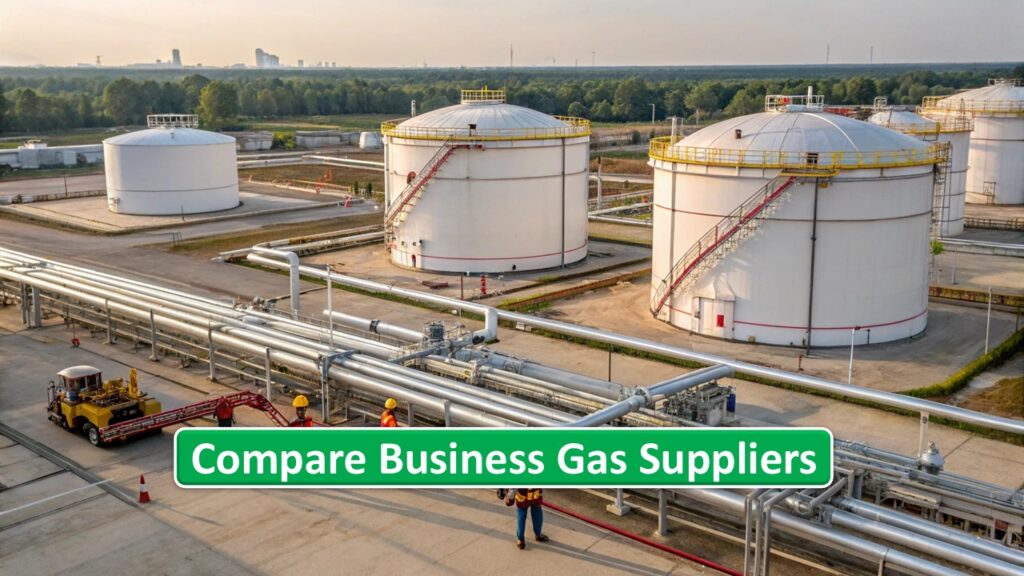

Every pound your business spends on gas is a pound that could be reinvested elsewhere. Yet across the UK, thousands of businesses are overpaying for commercial gas simply because they have never taken the time to compare business gas suppliers properly. With the commercial gas market fully deregulated and genuinely competitive, there has never been a better reason — or a more accessible route — to ensure your business is on the most cost-effective contract available.
Whether you are approaching a contract renewal, currently sitting on a costly deemed rate, or simply curious whether your existing deal represents fair value, this guide gives you everything you need to compare business gas suppliers confidently and make a switch that works in your business’s favour.
How the UK Commercial Gas Market Works
The UK commercial gas market operates on a deregulated, competitive basis. Unlike some European markets where energy supply remains a state-managed monopoly, UK businesses are free to choose their gas supplier from a wide pool of licensed providers — each setting their own tariffs, contract terms, and service propositions.
The physical delivery of gas — through the National Transmission System and local distribution networks — is managed by regulated infrastructure operators and remains unchanged regardless of which retail supplier you choose. Switching your business gas supplier is purely a commercial and administrative process. Your gas supply is never interrupted, your pressure and quality never change, and there is no work required on your premises.
What does change when you switch is who bills you, at what rate, and under what contract terms. This is where the meaningful differences between suppliers emerge — and where comparing the market delivers real value.
Why Most Businesses Are Overpaying for Commercial Gas
The single biggest reason businesses overpay for gas is inertia. When a commercial gas contract reaches its end date without active management, one of two things typically happens:
Auto-renewal — the incumbent supplier rolls the account onto a new contract at rates set to reflect their own commercial priorities rather than competitive market pricing. Suppliers are not obligated to offer their best rates at renewal, and many do not. Auto-renewal terms are frequently accompanied by limited notice windows, meaning businesses that miss the deadline to exit find themselves locked in for another full contract term at above-market rates.
Deemed rates — if no new contract is agreed before the current one expires, the account moves onto the supplier’s default out-of-contract tariff. Deemed rates are almost universally the most expensive commercial gas pricing available — typically set at a significant premium to any actively negotiated contract rate. Businesses can remain on deemed rates for months or even years without realising it, accumulating avoidable costs throughout.
Both outcomes are entirely preventable with proactive contract management. The solution is to begin your comparison process three to six months before your contract end date — giving yourself enough time to access the full market, evaluate options, and execute a switch before your existing contract expires.
What to Look for When You Compare Business Gas Suppliers
Unit Rate
The unit rate — expressed in pence per kWh — is the most visible component of a business gas tariff and the one that varies most significantly between suppliers. Unit rates are influenced by your annual consumption volume, your meter type, your location, your credit profile, and the current state of the wholesale gas market. Higher consumption businesses typically attract lower unit rates, but this advantage must be weighed against other tariff components.
Standing Charge
The standing charge is a fixed daily cost applied regardless of how much gas you consume. It covers network access, metering, and supplier administration costs. For businesses with lower annual consumption, the standing charge can represent a disproportionately large share of the total bill — making it an important comparison point alongside the unit rate.
Contract Length
Business gas contracts are typically offered on one, two, or three-year terms. Longer contracts can lock in favourable rates when the market is competitive, providing multi-year cost certainty. Shorter contracts offer greater flexibility to switch if better deals emerge or if your consumption profile changes significantly. The right contract length depends on your business’s appetite for price risk and the current trajectory of wholesale gas prices.
Fixed vs. Variable Pricing
Fixed-rate contracts set your unit rate for the entire contract duration, insulating your business from wholesale price volatility and enabling accurate budget forecasting. Variable or flexible contracts allow rates to move with the market — potentially delivering savings when wholesale prices fall, but also exposing your business to increases. For the majority of UK SMEs, fixed-rate contracts represent the most appropriate and manageable approach to commercial gas procurement.
Supplier Stability and Service Quality
Price comparison should never happen in isolation from supplier quality assessment. The energy market has seen supplier failures that created significant disruption for business customers — mid-contract uncertainty, involuntary account transfers, billing errors during transitions, and protracted customer service difficulties. When comparing business gas suppliers, it is worth factoring in the provider’s financial stability, customer service track record, and industry reputation alongside the headline tariff.
Green Gas and Sustainability Options
For businesses with carbon reduction targets or sustainability reporting requirements, green gas tariffs offer a way to offset the emissions associated with gas consumption. These contracts are typically backed by biomethane injection into the grid or carbon offset certificates and are now offered by a growing number of UK suppliers at competitive rates. If your business has ESG commitments or supply chain sustainability requirements, it is worth confirming which suppliers offer credible green gas options within your budget.
Business Gas Tariff Types Explained
Understanding the different tariff structures available in the commercial gas market helps you compare suppliers on a genuinely informed basis.
Fixed-rate tariffs are the most common choice for SMEs. Your unit rate is agreed at the point of contract and remains constant throughout the term, regardless of wholesale market movements. These tariffs offer maximum cost predictability and are straightforward to budget against.
Flexible or basket purchasing contracts allow larger businesses to purchase their gas in tranches over time, averaging their price exposure across different market conditions. This approach can yield savings compared to fixing at a single point in time but requires specialist procurement support and is generally only suitable for organisations with significant annual consumption.
Deemed tariffs — as discussed above — are the default out-of-contract rates applied when no active supply agreement is in place. They should be avoided at all costs and resolved as quickly as possible by moving onto a competitively procured contract.
Blend-and-extend contracts allow businesses partway through an existing contract to incorporate current market rates into a new, extended agreement — averaging the old and new rates. This can be a useful tool when wholesale prices have fallen significantly since the original contract was signed, though it requires careful analysis to assess the net benefit.
How to Compare Business Gas Suppliers Effectively
The most efficient and reliable way to compare business gas suppliers is through a specialist commercial energy comparison service with access to the full market. Approaching suppliers individually is time-consuming, produces non-comparable quotes, and rarely delivers the most competitive rates — suppliers reserve their best pricing for intermediaries handling volume enquiries.
Smart Biz Utility connects businesses with the UK’s leading commercial gas suppliers, delivering tailored, real-time quotes based on your specific consumption profile, meter type, and business requirements. Our expert advisers handle the entire process — from market assessment and quote comparison through to contract execution and supplier switch — ensuring you benefit from competitive rates without any operational disruption or administrative burden.
We work with businesses of all sizes: from single-site SMEs with straightforward procurement needs to multi-site enterprises requiring portfolio-level gas management. Whatever the scale and complexity of your gas procurement, our team has the market access and expertise to deliver meaningful savings.
What You Need to Start Comparing Business Gas Quotes
Getting started takes only a few minutes. To generate accurate, whole-of-market quotes, you will need:
- Your Meter Point Reference Number (MPRN) — the unique identifier for your gas supply point, found on your current bill
- Your annual gas consumption in kWh — also available on your bill or from your current supplier
- Your current supplier name and contract end date
- Your business address and postcode
- Any specific requirements — green gas certification, multi-site consolidation, flexible pricing structures, and so on
With this information, Smart Biz Utility can generate competitive quotes from multiple suppliers simultaneously, compare them on a like-for-like basis, and identify the deal that delivers the best value for your business.
The Business Case for Regular Gas Supplier Comparison
Comparing business gas suppliers should not be a one-off activity undertaken grudgingly at contract renewal — it should be a regular, structured part of your business’s utility procurement strategy.
Wholesale gas prices move constantly, influenced by global commodity markets, geopolitical developments, seasonal demand, and infrastructure factors. The competitive landscape among retail suppliers shifts as new entrants emerge, existing suppliers adjust their pricing strategies, and market conditions evolve. The contract that represented genuine value at your last renewal may be well above market rate today.
Businesses that commit to reviewing their gas supply at every renewal, and that engage a trusted comparison partner to access current market rates, consistently achieve lower costs and better contract terms than those that manage energy procurement reactively. Over a five-year horizon, the cumulative saving from proactive gas supplier comparison can represent a significant contribution to your business’s financial performance.
Conclusion: Compare Business Gas Suppliers and Take Control of Your Costs
The commercial gas market rewards businesses that engage with it actively. By taking the time to compare business gas suppliers at every renewal — and by working with a specialist partner who can access the full market on your behalf — your business avoids the costly traps of auto-renewal and deemed rates, and consistently secures pricing that reflects genuine competition.
Smart Biz Utility makes that process straightforward, transparent, and fully managed. Compare business gas suppliers today and start securing the savings your business deserves.
About Us:
I help companies compare business energy prices and discover cost-saving solutions, offering clear guidance, reliable insights, and smarter choices for efficient, sustainable energy management today.
Contact:
Smartbiz Utility
Email id: – info@smartbizutility.com
Country: – United Kingdom
City: – Manchester
Address: – Suite 212, 76 Talbot Road, Manchester, Greater Manchester, M16 0PQ
Tel No.: – 0800-058-4297