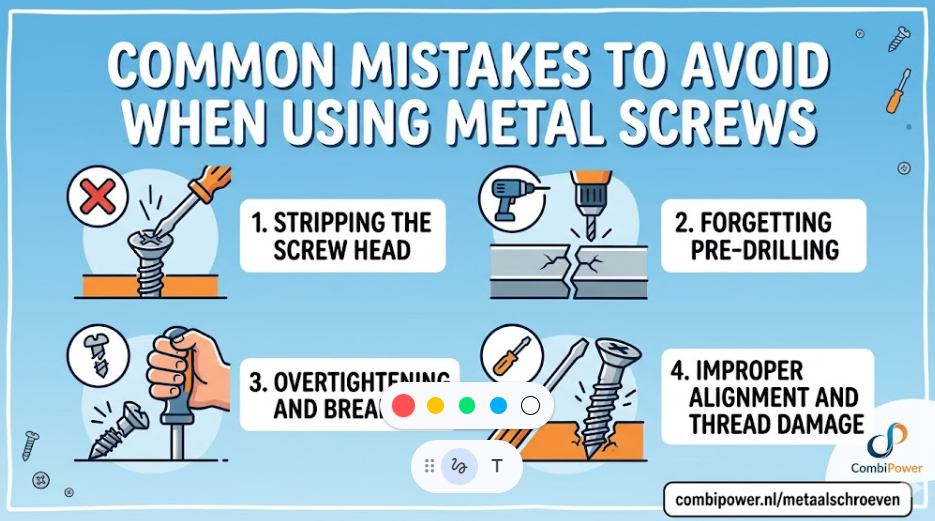

Metal screws are widely used across construction, manufacturing, and DIY projects. From securing metal sheets to assembling machinery, they play a critical role in ensuring strength and durability. But despite their importance, they are often misused—leading to weak connections, damaged materials, and unnecessary rework.
The truth is, working with metal screws requires more attention than many people expect. Small mistakes during selection or installation can quickly turn into bigger problems over time.
In this blog, we’ll walk through the most common mistakes to avoid when using metal screws and how you can ensure stronger, more reliable results.
Why Getting It Right Matters
Unlike wood or softer materials, metal doesn’t forgive errors easily. Once a mistake is made whether it’s incorrect drilling, over-tightening, or poor alignment it can compromise the entire connection.
Using the right approach helps you:
- Maintain structural strength
- Prevent material damage
- Improve long-term durability
- Reduce maintenance and repair costs
Before diving into the mistakes, it’s important to start with the right products.
Start with the Right Metal Screws
Choosing quality fasteners is the first step toward a successful installation. If you’re working on metal-based applications, you can explore a range of metal screws designed for precision, durability, and reliable performance across different use cases.
Mistake 1: Using the Wrong Type of Screw
One of the most common mistakes is assuming that all screws work the same way. Metal screws are specifically designed to handle harder surfaces, and using standard screws can lead to:
- Poor penetration
- Weak grip
- Damaged threads
Different types of metal screws are designed for different tasks—such as self-tapping screws, machine screws, or sheet metal screws. Choosing the wrong type can affect both performance and safety.
Mistake 2: Skipping Pilot Holes When Needed
While some metal screws are self-drilling, not all of them are. Skipping a pilot hole when it’s required can cause:
- Difficulty during installation
- Misalignment
- Stripped threads
Drilling a pilot hole ensures that the screw enters the material smoothly and maintains its grip. It also reduces stress on both the screw and the material.
Mistake 3: Applying Too Much Force
It’s easy to think that tighter means stronger but that’s not always true.
Over-tightening metal screws can:
- Strip the threads
- Damage the screw head
- Weaken the connection
The goal is to achieve a secure fit, not maximum force. Using the correct torque ensures that the screw holds firmly without causing damage.
Mistake 4: Ignoring Material Compatibility
Not all metals behave the same way. Using the wrong screw material for a specific metal surface can lead to corrosion or reduced strength over time.
For example:
- Stainless steel screws are ideal for corrosion resistance
- Coated screws perform better in outdoor environments
Mixing incompatible materials can cause long-term issues, especially in environments exposed to moisture or temperature changes.
Mistake 5: Choosing the Wrong Size
Size plays a crucial role in how well a metal screw performs.
Using a screw that is too short may not provide enough grip, while one that is too long can:
- Damage the material
- Protrude unnecessarily
- Affect the overall finish
The diameter is equally important. A screw that’s too thin may not handle the load, while one that’s too thick can be difficult to install.
Mistake 6: Poor Alignment During Installation
Alignment is often overlooked, especially in quick installations. However, improper alignment can lead to:
- Uneven fastening
- Increased stress on the screw
- Reduced holding strength
Ensuring that the screw is inserted straight and aligned with the hole improves both performance and appearance.
Mistake 7: Using Worn-Out Tools
Even the best metal screw won’t perform well if the tools used are not in good condition.
Worn-out drill bits or screwdrivers can:
- Damage screw heads
- Reduce installation efficiency
- Lead to improper tightening
Using the right tools and keeping them in good condition—makes a noticeable difference in results.
Mistake 8: Ignoring Environmental Conditions
Metal screws are often exposed to challenging environments. Ignoring these conditions can lead to premature failure.
For outdoor or industrial applications, consider:
- Corrosion resistance
- Exposure to chemicals or moisture
- Temperature variations
Choosing screws with the right coating or material helps maintain performance over time.
Mistake 9: Reusing Old Screws
It might seem practical to reuse screws, but this can compromise the integrity of your connection.
Used screws may have:
- Worn threads
- Reduced strength
- Hidden damage
For critical applications, always use new screws to ensure reliability.
Mistake 10: Rushing the Installation Process
Speed is important on-site, but rushing often leads to mistakes.
Common issues caused by rushing include:
- Misaligned screws
- Incorrect placement
- Incomplete tightening
Taking a few extra seconds to ensure proper installation can save hours of rework later.
A Better Approach to Using Metal Screws
Avoiding these mistakes doesn’t require advanced skills—it simply requires awareness and attention to detail.
A good approach includes:
- Choosing the right type and size of screw
- Preparing the material properly
- Using the correct tools and techniques
- Taking environmental factors into account
This not only improves the quality of your work but also enhances long-term durability.
Real-World Impact of Proper Usage
When metal screws are used correctly, the difference is clear:
- Stronger and more secure connections
- Better resistance to wear and tear
- Reduced maintenance over time
- Improved overall finish
These benefits are especially important in professional settings where reliability is critical.
Final Thoughts
Metal screws may seem like a small part of a project, but they have a big impact on the final outcome. Avoiding common mistakes such as using the wrong type, over-tightening, or ignoring environmental conditions can significantly improve both performance and durability.
By taking a more careful and informed approach, you can ensure that every connection is secure, efficient, and built to last.
In the end, it’s not just about fastening materials—it’s about doing it right the first time.