
The moment the sun sets, your home tells a new story. Without effective lighting, even the most stunning architecture can disappear into the darkness, becoming an anonymous silhouette. In 2026, residential facade lighting has evolved from a simple security measure to a critical component of home design. It is the brushstroke that defines texture, creates mood, and extends the beauty of your living space into the night . As Julee Ireland of the Home Renovation School perfectly states, “The best lighting doesn’t compete with a space it completes it” .
The 2026 Mindset: Light as an Experience
Today’s most sought-after homes are moving away from static, uniform lighting. According to Lutron’s 2026 Luxury Residential Trend Report, we are entering an era where lighting is central to the emotional experience of a home. A staggering 94% of designers and architects report that their clients now believe lighting is highly important . This isn’t just about flipping a switch; it’s about creating dynamic environments that adapt to our lives. Homeowners are prioritizing ambience and wellness, seeking “human-centric” designs that shift with the rhythms of the day from crisp, invigorating mornings to warm, cozy evenings .
Techniques to Transform Your Facade
Achieving a show-stopping exterior relies on understanding how light interacts with your home’s materials. Here are three key techniques used by professional lighting designers:
- Grazing to Reveal Texture
If your home features natural stone, brick, or textured render, “grazing” is your best friend. This technique involves placing a light fixture close to the wall, directing the beam upward or downward to skate across the surface . The result is a dramatic play of shadows and highlights that emphasizes every ridge and groove, giving your facade a rich, tactile quality . - Wall Washing for Grandeur
For smoother surfaces or modern architectural panels, a “wall wash” effect creates a smooth, uniform glow. By placing fixtures further away from the facade, the light spreads evenly, bathing the structure in illumination . This technique provides an elegant backdrop and makes the home feel more prominent and inviting from the street. - Silhouetting for Drama
For a truly unique look, consider silhouetting. By placing lights behind shrubs, decorative grasses, or sculptural elements, you cast their shadows against the wall of your house . This creates depth and mystery, turning simple landscaping into a striking piece of nocturnal art.
The Rise of Smart and Sustainable Design
Technology is the silent partner in modern facade lighting. In 2026, smart controls are no longer a luxury add-on but an essential part of the ecosystem. Designers report that 61% now include lighting that can be controlled via smartphone or app . This allows homeowners to adjust color temperatures ideally warm whites between 2700K and 3000K for residential appeal or set the perfect scene for a dinner party versus a quiet night in .
Furthermore, durability matters. Today’s fixtures are expected to be as tough as they are beautiful. High IP ratings for weather resistance, energy-efficient LEDs, and minimalist “invisible” fixtures that hide by day are the hallmarks of a modern installation .
Bringing It All Together
Residential facade lighting is the final layer of your home’s architectural expression. It enhances safety, elevates curb appeal, and ensures that your home’s beauty isn’t lost at dusk. Whether you choose to graze a stone wall or silhouette a tree, remember that the goal is to create a home that feels whole day and night.
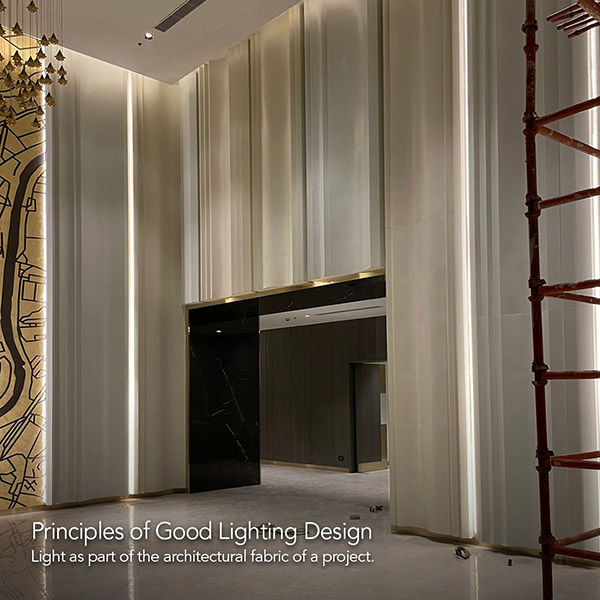
Architecture and interior lighting design are dependent on each other and neither follow a linear pattern. Lighting design should not be an afterthought once the civil work of a Facade Lighting Consultants India and High End Residential Lighting Design.
Architecture and interior lighting design are dependent on each other and neither follow a linear pattern. Lighting design should not be an afterthought once the civil work of a Facade Lighting Consultants India and High End Residential Lighting Design.