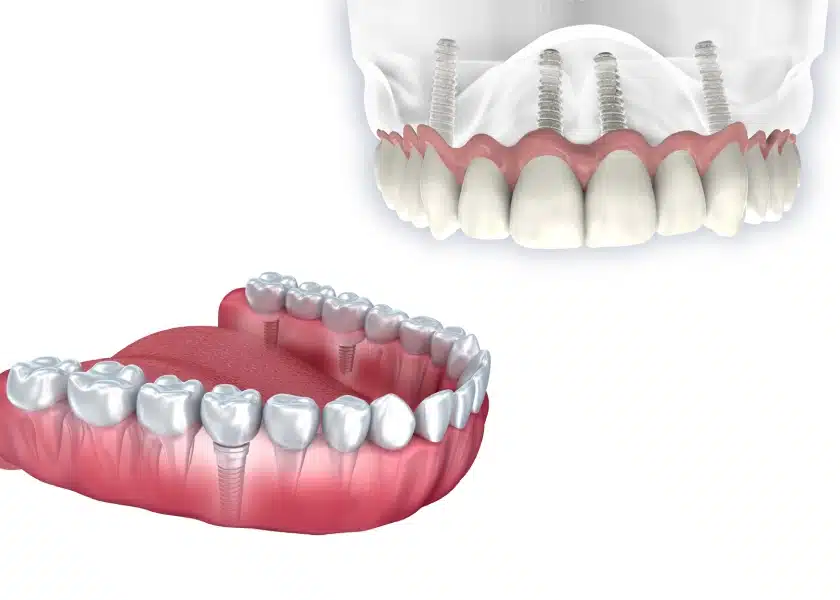

Tooth loss doesn’t just affect how you smile—it changes how you eat, speak, and even how your jawbone ages over time. For patients missing most or all teeth in one jaw, modern dentistry now offers two powerful full-arch solutions: All-on-4 dental implants and traditional dental implants.
Both options are designed to restore function and confidence, but many patients ask one key question before deciding: Which option lasts longer? Understanding how these treatments differ in design, longevity, maintenance, and overall value can help you make a confident, long-term decision.
Understanding Full-Arch Dental Implant Solutions
A full-arch implant solution replaces an entire row of missing teeth using dental implants anchored into the jawbone. Unlike removable dentures, implants fuse with the bone, creating a stable foundation that closely mimics natural teeth.
The two most common full-arch approaches are:
-
Traditional dental implants (multiple implants with individual or segmented crowns)
-
All-on-4 implant treatment (four strategically placed implants supporting a full arch)
While both aim for durability, their structure and biomechanics play a major role in how long they last.
What Are Traditional Dental Implants?
Traditional dental implants involve placing 6 to 8 implants per jaw, sometimes even more, depending on bone quality and bite forces. Each implant supports a single crown or a small bridge, creating a highly customized and segmented restoration.
Key characteristics:
-
Individual load distribution across multiple implants
-
Often requires bone grafting if bone volume is insufficient
-
Longer treatment timeline
-
Separate crowns make repairs or replacements easier
Because each implant functions independently, traditional implants have long been considered the gold standard for longevity.
What Is All-on-4 Implant Treatment?
All-on-4 is a modern, streamlined approach where just four implants support an entire arch of fixed teeth. Two implants are placed vertically at the front, while two are angled at the back to maximize bone contact and stability.
For patients researching all on 4 implant treatment in Fursungi, this option is popular due to its faster results and reduced surgical complexity.
Key characteristics:
-
Full arch supported by only four implants
-
Often avoids bone grafting
-
Teeth can be placed quickly, sometimes on the same day
-
One solid prosthesis instead of multiple individual crowns
This design focuses on efficiency while still delivering strong, functional results.
Longevity: Which Option Lasts Longer?
When it comes to lifespan, both All-on-4 and traditional implants can last 20 years or more—and often a lifetime—when placed correctly and maintained well. However, their longevity depends on different factors.
Traditional Implants and Longevity
Traditional implants tend to have a slight edge in durability because:
-
Bite forces are distributed across more implants
-
Each implant can be maintained or replaced independently
-
Bone stimulation occurs across a wider area
If one implant fails, it usually doesn’t compromise the entire arch.
All-on-4 and Longevity
All-on-4 implants are also highly durable, but:
-
Each implant carries more load
-
The full arch depends on all four implants working together
-
Prosthesis wear may occur sooner due to continuous stress
That said, clinical studies show excellent long-term success when the procedure is properly planned and executed.
Bone Health and Its Impact on Durability
Bone quality plays a major role in how long implants last. Traditional implants often require sufficient bone volume, which is why bone grafting may be needed. All-on-4 implants use angled placement to maximize existing bone, making them ideal for patients with moderate bone loss.
For patients exploring all on 4 dental implants near Fursungi, this approach can be a practical solution when bone grafting is not preferred.
Maintenance and Repairs Over Time
Longevity isn’t just about the implants—it’s also about maintenance.
Traditional implants:
-
Easier to repair individual crowns
-
Problems are usually localized
-
Higher long-term flexibility
All-on-4 implants:
-
Prosthesis is one solid unit
-
Repairs may involve removing the full arch
-
Requires strict oral hygiene and professional care
With good habits and regular checkups, both systems perform exceptionally well.
Cost vs Longevity: What Should You Consider?
Many patients compare lifespan alongside cost. While traditional implants may last slightly longer due to redundancy, they often come with higher initial costs due to:
-
More implants
-
Longer treatment time
-
Possible bone grafting
In comparison, patients often find all on 4 implant treatment cost in Fursungi more manageable, especially when looking for faster, full-arch restoration.
Similarly, all on 4 dental implants cost in Fursungi is generally lower than placing multiple individual implants for a full arch, making it appealing for patients seeking value without compromising function.
Affordability Without Compromising Durability
For many patients, affordability is part of longevity—because a treatment you can maintain is more likely to last.
Options like affordable all on 4 implant treatment in Fursungi provide:
-
Fixed teeth at a lower overall cost
-
Fewer surgeries
-
Reduced downtime
This makes All-on-4 a practical long-term solution for many full-arch cases.
Which Option Is Right for You?
The “longer-lasting” solution depends on your specific situation:
-
Bone density and jaw structure
-
Bite force and chewing habits
-
Budget and treatment timeline
-
Willingness for maintenance and follow-ups
Patients visiting a trusted dental clinic in Fursungi often benefit from a detailed evaluation before choosing between these options.
The Role of Expert Planning
No implant system lasts without proper planning. Accurate diagnostics, digital imaging, and precise surgical execution significantly affect outcomes.
At Smyle Square Dental, full-arch implant solutions are planned with a focus on long-term stability, bite balance, and patient comfort—ensuring whichever option is chosen delivers reliable, lasting results.
Final Verdict: Which Lasts Longer?
Traditional dental implants may offer slightly greater long-term flexibility and redundancy, making them ideal for patients with strong bone support and a higher budget.
All-on-4 implants, however, provide impressive durability, faster restoration, and excellent value—especially for patients seeking a fixed full-arch solution without extensive surgeries.
Both options can last decades. The real difference lies in how well the treatment matches your oral condition and lifestyle.
Conclusion
When comparing All-on-4 vs traditional dental implants, longevity isn’t about choosing the “stronger” option—it’s about choosing the right one. With proper planning, expert placement, and good oral hygiene, either solution can restore your smile for years to come.
A professional consultation remains the most reliable way to determine which full-arch solution will truly stand the test of time for you.