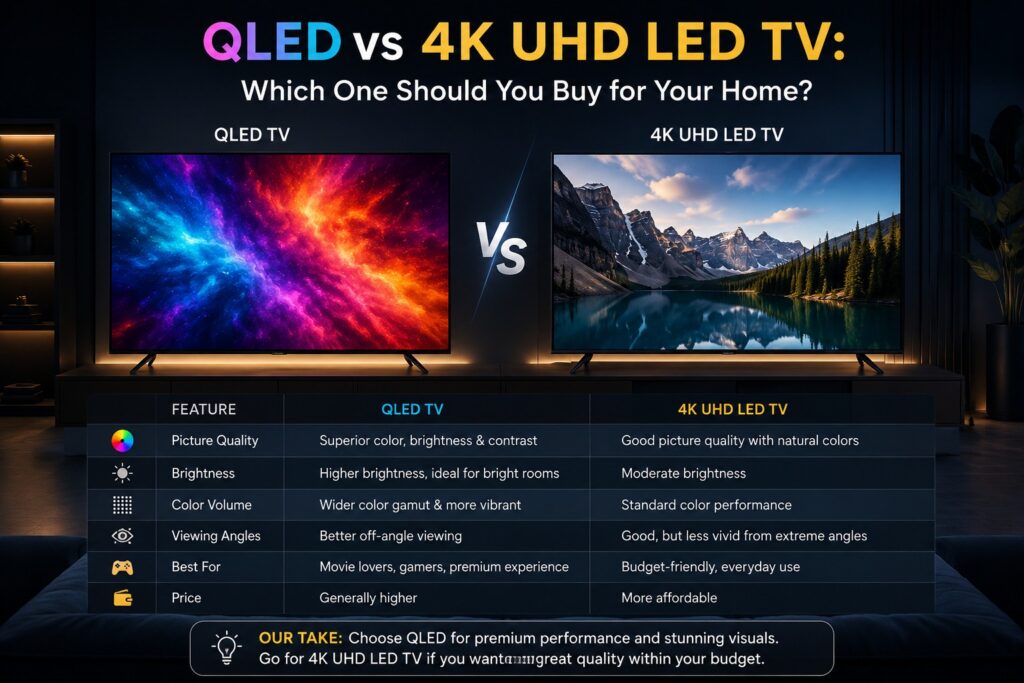

Buying a new TV can be confusing because there are many display terms in the market. Two common terms people often compare are QLED TV and 4K UHD LED TV. Many buyers think both are the same, while others believe QLED is completely different from LED. The truth is that both can offer good picture quality, but they are designed for different viewing needs, budgets, and performance expectations.
If you are planning to buy a TV for your home, gaming setup, lounge, bedroom, or office, understanding the difference between QLED and 4K UHD LED TV can help you make a better decision. The right TV depends on picture quality, brightness, color performance, room lighting, screen size, smart features, and your budget.
What Is a 4K UHD LED TV?
A 4K UHD LED TV is a television that offers a high screen resolution of 3840 x 2160 pixels. This means it has four times more pixels than a Full HD TV. Because of this higher resolution, 4K UHD TVs show sharper images, better details, and clearer visuals.
The term “LED” refers to the backlight technology used in the TV. LED TVs use light-emitting diodes to brighten the screen. Most common TVs available in the market are LED TVs, and many of them now come with 4K UHD resolution.
A 4K UHD LED TV is a good choice for everyday entertainment such as watching dramas, movies, YouTube, Netflix, sports, news, and family content. It provides clear picture quality at a more affordable price compared to premium display technologies.
What Is a QLED TV?
QLED stands for Quantum Dot LED. A QLED TV is also based on LED technology, but it uses a special quantum dot layer to improve color and brightness. This layer helps the TV produce richer colors, brighter images, and better picture performance compared to many standard LED TVs.
QLED TVs are popular for their vibrant colors and high brightness. They are especially useful in bright rooms where sunlight or room lights can affect normal TV viewing. If you watch movies, sports, gaming content, or colorful visuals, a QLED TV can provide a more premium viewing experience.
Most QLED TVs also come with 4K UHD resolution, which means they offer both high resolution and improved color technology. So, QLED is not the opposite of 4K. A TV can be both QLED and 4K at the same time.
Main Difference Between QLED and 4K UHD LED TV
The main difference is display technology. A 4K UHD LED TV focuses on resolution and uses standard LED backlighting. A QLED TV uses LED backlighting too, but adds quantum dot technology to improve brightness and color quality.
In simple words, 4K UHD tells you how sharp the picture is, while QLED tells you how colorful and bright the picture can look. A standard 4K LED TV can show clear details, but a QLED TV usually offers better color depth, brightness, and overall visual impact.
If your main requirement is a clear picture at a reasonable price, a 4K UHD LED TV can be enough. If you want more vibrant colors, stronger brightness, and a premium viewing experience, QLED is a better option.
Picture Quality Comparison
Picture quality is one of the most important factors when buying a TV. A 4K UHD LED TV gives sharp and detailed images because of its high resolution. It is suitable for most users and works well for daily entertainment.
QLED TVs usually provide better picture quality because they enhance colors and brightness. The image looks more lively, especially in colorful scenes. Nature documentaries, sports matches, animated movies, and high-quality streaming content can look more impressive on a QLED screen.
However, picture quality also depends on the brand, model, panel type, processor, HDR support, and display settings. A high-end 4K LED TV may perform better than a low-quality QLED model. That is why buyers should compare complete specifications, not just the display name.
Brightness and Room Lighting
Brightness is an area where QLED TVs usually perform better. If your TV is placed in a bright lounge or a room with sunlight, QLED can provide better visibility. Its higher brightness helps the picture remain clear even in well-lit spaces.
A standard 4K UHD LED TV also works well in normal rooms, but in very bright environments, the picture may look slightly less vibrant. For bedrooms or rooms with controlled lighting, a 4K LED TV can provide a very good experience.
If your room has large windows, strong lights, or you often watch TV during the day, QLED can be a better choice. If you mostly watch TV at night or in a normal indoor setting, a 4K UHD LED TV can perform well.
Color Performance
QLED TVs are known for better color performance. Quantum dot technology helps produce richer, brighter, and more accurate colors. This makes scenes look more realistic and attractive.
A 4K UHD LED TV also offers good colors, especially in modern models, but it may not match the color richness of QLED. For casual viewing, the difference may not be very noticeable. But for users who enjoy movies, gaming, sports, and high-quality video content, QLED can feel more premium.
Color performance is especially important for people who want a cinema-like experience at home. A QLED TV can make colorful visuals look more powerful and enjoyable.
Viewing Experience for Movies and Sports
For movies, both TV types can provide a good experience if they support 4K content and HDR. A 4K UHD LED TV offers sharp details, while a QLED TV adds better brightness and color depth. This can make movie scenes look more dramatic and engaging.
For sports, QLED can be a good choice because of its bright display and vivid colors. Cricket, football, racing, and other fast-moving sports can look more exciting on a high-quality QLED TV. However, motion handling also depends on refresh rate and processor quality.
If you mainly watch casual dramas, news, and YouTube, a 4K UHD LED TV is enough. If you want a more cinematic and colorful experience, QLED is better.
Gaming Performance
For gaming, QLED TVs can offer a more immersive experience because of better colors and brightness. Games with rich graphics look more vibrant on a QLED screen. Many QLED models also come with gaming features such as low input lag, higher refresh rate, and HDMI 2.1 support, depending on the model.
A 4K UHD LED TV can also be good for gaming, especially if it has low input lag and a decent refresh rate. For casual console gaming, it can perform well. But for serious gamers who want better visuals and smoother performance, a good QLED TV may be worth considering.
Before buying a TV for gaming, check refresh rate, response time, HDMI ports, input lag, and gaming mode.
Price Difference
Price is one of the biggest differences. Standard 4K UHD LED TVs are usually more affordable. They are a good option for buyers who want a large screen and sharp 4K resolution within a reasonable budget.
QLED TVs are usually more expensive because they offer better color and brightness technology. The higher price can be worth it if you want a premium viewing experience and plan to use the TV for movies, sports, gaming, and high-quality streaming.
If your budget is limited, a 4K UHD LED TV is a smart choice. If you can spend more for better display quality, QLED is a strong upgrade.
Which TV Is Better for Home Use?
For normal home use, a 4K UHD LED TV is enough for many families. It is suitable for watching TV channels, YouTube, Netflix, dramas, movies, and daily entertainment. It gives clear picture quality and is budget-friendly.
QLED is better for people who want superior brightness, richer colors, and a more premium experience. It is especially good for large lounges, bright rooms, movie lovers, sports fans, and gamers.
The final decision depends on your needs. If you want value for money, choose a 4K UHD LED TV. If you want better visual quality and long-term premium performance, choose QLED.
Choose a Trusted Store for Buying a TV
When buying a TV, choosing a trusted store is very important. A reliable store provides original products, proper warranty, clear specifications, secure delivery, and after-sales support. Since TVs are long-term electronics, buyers should avoid unknown sellers or deals that look too good to be true.
Before purchasing, check screen size, resolution, display technology, smart TV features, warranty, refresh rate, HDR support, ports, and brand reputation. Also compare prices carefully, but do not choose a TV based on price alone.
A trusted store helps you avoid fake products, unclear warranty claims, and poor customer service. Whether you buy a 4K UHD LED TV or a QLED TV, always choose a seller that offers genuine products and proper support.
Final Thoughts
Both QLED and 4K UHD LED TVs are good options, but they serve different needs. A 4K UHD LED TV is affordable, sharp, and suitable for everyday entertainment. It is a practical choice for families who want a clear picture and smart features within a reasonable budget.
A QLED TV offers better brightness, richer colors, and a more premium viewing experience. It is ideal for bright rooms, movie lovers, sports fans, and gamers who want improved picture quality.
If you want a budget-friendly TV for normal use, a 4K UHD LED TV is a good choice. If you want more advanced display quality and can spend extra, a QLED TV is worth considering.
FAQs
- Is QLED better than 4K UHD LED TV?
QLED usually offers better brightness and color quality, while 4K UHD LED TV offers sharp resolution at a more affordable price. - Can a QLED TV also be 4K?
Yes, most QLED TVs come with 4K UHD resolution, so a TV can be both QLED and 4K. - Which TV is better for bright rooms?
QLED is usually better for bright rooms because it provides higher brightness and more vibrant colors. - Is 4K UHD LED TV good for daily use?
Yes, a 4K UHD LED TV is excellent for daily use, including dramas, movies, YouTube, Netflix, sports, and news. - Which TV should I buy for gaming?
A QLED TV is better for a premium gaming experience, but a 4K UHD LED TV can also be good if it has low input lag, gaming mode, and a good refresh rate.