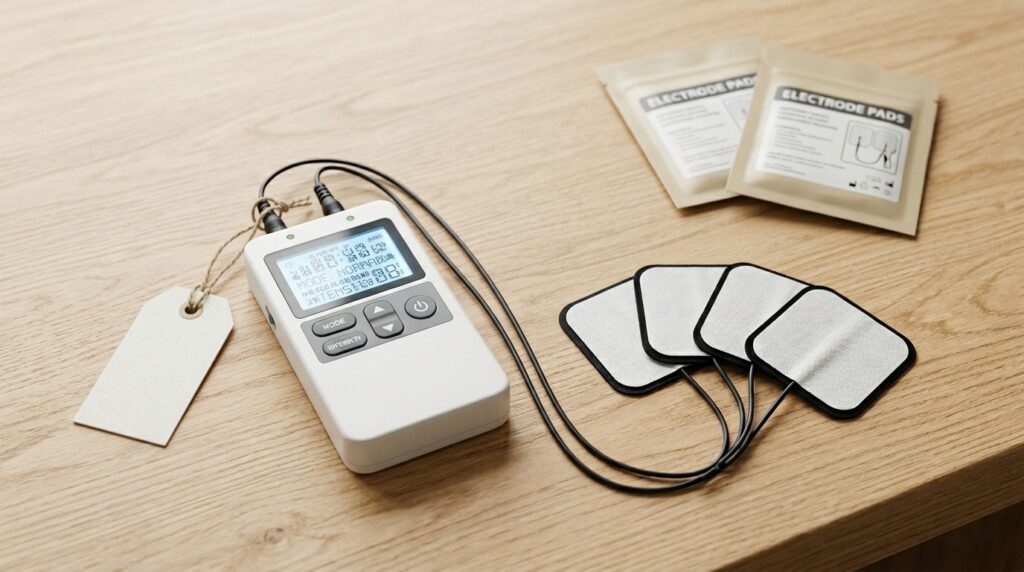

Chronic pain is one of the most under-addressed health problems in Pakistan, and millions of patients living with arthritis, sciatica, frozen shoulder, post-surgical discomfort, or sports injuries are looking for drug-free ways to manage it. Transcutaneous Electrical Nerve Stimulation, better known as TENS, has become one of the most trusted home physiotherapy options because it is non-invasive, portable, and surprisingly affordable. If you are comparing the TENS machine price in the Pakistani market, this complete 2026 guide will walk you through what TENS actually does, the difference between TENS and EMS, current price ranges, and what to look for so you do not end up wasting money on a device that delivers weak or inconsistent stimulation.
What Is a TENS Machine and How Does It Work?
A TENS machine is a small, battery-powered device that delivers low-voltage electrical pulses through self-adhesive electrode pads placed on the skin near the painful area. The pulses stimulate sensory nerves to interrupt pain signals before they reach the brain, a principle known as the gate control theory of pain. TENS therapy is also believed to encourage the body’s natural release of endorphins, which is why patients often feel relief that lasts for hours after a session ends. Modern TENS machines are compact enough to slip into a handbag and are widely used by physiotherapists, gynaecologists during labour pain, dentists, and home users managing chronic conditions.
TENS vs EMS: Understanding the Difference Before You Buy
Many shoppers confuse TENS with EMS (Electrical Muscle Stimulation). TENS targets nerves to block pain signals, while EMS targets muscles directly to cause contractions, and is used for muscle re-education, post-injury rehabilitation, and atrophy prevention. Combination units that offer both modes are extremely popular because they cover almost every home physiotherapy scenario. If you are paying close to the same price for a single-mode and dual-mode device, the dual-mode unit is almost always the better long-term choice.
Factors That Affect TENS Machine Price in Pakistan
1. Number of Channels and Output Pads
Single-channel units serve one body area at a time, while dual-channel and four-channel units let you treat multiple regions simultaneously, which is a real advantage for patients with widespread pain or for physiotherapy clinics serving several patients per hour.
2. Pre-Programmed Modes
Entry-level units offer 5 to 8 modes covering basic pulse patterns. Mid-tier and premium devices include 20 or more programmes targeting specific conditions like sciatica, neck pain, period cramps, sports recovery, and circulation improvement. More modes mean more clinical flexibility for the same investment.
3. Adjustability of Intensity, Pulse Width, and Frequency
Quality machines allow independent adjustment of pulse width (50 to 250 microseconds), frequency (1 to 150 Hz), and intensity. Cheap units with only an intensity dial deliver poor results because pain types respond differently to different waveforms.
4. Display, Timer, and Build Quality
LCD displays with treatment timers, lock functions, and rechargeable lithium batteries push the price up but make the device far easier to use over months and years compared with low-end units that run on disposable 9V batteries.
Average TENS Machine Price Range in Pakistan (2026)
Basic single-channel TENS units in Pakistan currently range from PKR 4,500 to PKR 9,000. Mid-range dual-channel TENS plus EMS combination devices fall between PKR 12,000 and PKR 28,000. Professional-grade physiotherapy units with four channels, ultrasound therapy integration, and clinical preset libraries can cost PKR 45,000 to PKR 150,000 and are typically purchased by physiotherapy clinics, sports medicine centres, and rehabilitation facilities rather than home users.
Top Recommended TENS Machine for Home Use
For Pakistani families looking for a reliable home pain-relief device without breaking the bank, the Comfy Stim TENS/EMS EV-806 has emerged as one of the most popular choices in the mid-price segment. Manufactured by Everyway Taiwan, this combination unit offers 5 TENS modes for pain relief and 2 EMS modes for muscle stimulation, all in a compact device weighing just 150 grams. The fully adjustable pulse width, pulse rate, ramp time, and timer let users fine-tune therapy for everything from sciatica to post-workout muscle recovery. The dual-channel output means two body areas can be treated simultaneously, which is a real advantage for patients with widespread pain or families sharing the device. With proper electrode placement and consistent use, devices like this regularly help users reduce their reliance on oral painkillers, which is exactly why TENS therapy has become so popular for home physiotherapy in Pakistan.
How to Choose the Right TENS Machine
Identify Your Primary Pain Type
Sharp, acute pain often responds best to high-frequency TENS (80 to 120 Hz), while chronic, deep pain usually responds better to low-frequency TENS (2 to 10 Hz) that triggers endorphin release. A unit with both ranges is far more useful than a one-trick device.
Check Pad Quality and Replacement Cost
Self-adhesive electrode pads are consumables that lose adhesion after 20 to 40 uses. Confirm that replacement pads in standard sizes are easily available locally, otherwise you will be forced to buy expensive imports every few months.
Look for Safety Certifications
Genuine devices carry CE marking and ISO 13485 certification. Asking the supplier for certification copies before purchase is a simple way to filter out unsafe imports flooding the market.
Common Mistakes Buyers Make
The biggest mistake is choosing a device based purely on price. A 5,000 rupee unit with weak output and unreliable pads will sit in a drawer within a month, while a 15,000 rupee combination unit used regularly can save the family hundreds of thousands of rupees in physiotherapy visits over a year. The second common mistake is using TENS without checking with a doctor when you have a pacemaker, are pregnant, or have undiagnosed pain, since electrical stimulation can interfere with implanted devices and may mask symptoms of a serious underlying condition.
Final Thoughts on Buying a TENS Machine in Pakistan
A well-chosen TENS machine is genuinely one of the most cost-effective health investments a Pakistani household can make. The right unit will pay for itself within months by reducing painkiller use, cutting physiotherapy clinic trips, and giving patients real control over their day-to-day comfort. For users who want premium build quality, advanced programming, and longer warranty coverage, the Beurer Digital TENS/EMS EM 49 from Germany is widely regarded as one of the best dual-mode units available locally, offering 64 pre-programmed applications, 6 customisable programs, dual independent channels, and the trusted Beurer build quality that has made the brand a household name across Europe. Whichever model you choose, take the time to learn proper electrode placement, start at low intensity, and use the device consistently rather than sporadically. With a quality TENS device and the right technique, lasting pain relief is genuinely within reach for most patients.
Frequently Asked Questions (FAQs)
Q1: What is the price of a TENS machine in Pakistan?
Basic single-channel TENS units start from PKR 4,500 to PKR 9,000. Mid-range dual-channel TENS plus EMS combination devices range from PKR 12,000 to PKR 28,000. Professional clinical units cost PKR 35,000 to PKR 150,000.
Q2: Is TENS therapy safe to use at home?
Yes, TENS is generally very safe for home use. However, avoid using it if you have a pacemaker, are pregnant (without doctor approval), have epilepsy, or have undiagnosed pain. Never place electrodes on the front of the neck, eyes, or broken skin.
Q3: How long should a TENS therapy session last?
A typical TENS session runs 20 to 60 minutes and can be repeated 3 to 4 times a day if needed. Always follow the device manual or your physiotherapist’s recommendation, and take a 20-minute break between sessions on the same body area.
Q4: Can pregnant women use a TENS machine?
TENS is widely used during labour pain management and is considered safe in late pregnancy under medical supervision. However, it should generally be avoided during the first trimester and never placed on the abdomen or lower back without doctor approval.
Q5: How often should I replace TENS electrode pads?
Self-adhesive electrode pads typically last 20 to 40 uses before adhesion drops noticeably. Replace them as soon as they stop sticking properly, since worn pads deliver weaker, less consistent stimulation and may cause skin irritation.