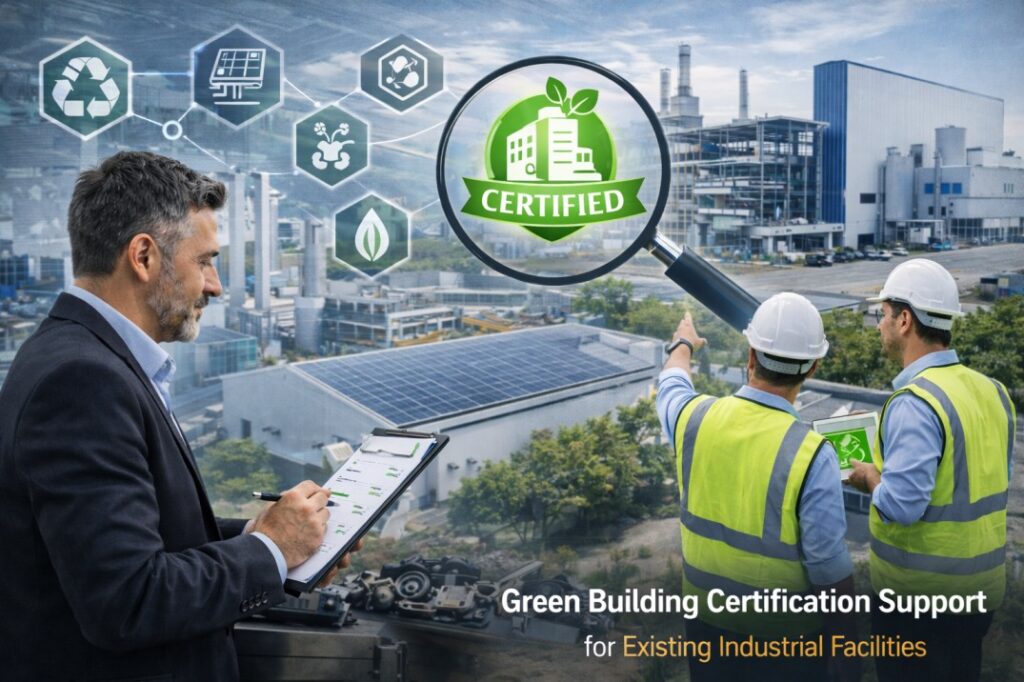

Industrial facilities across India are under increasing pressure to improve sustainability performance, reduce operating costs, and meet environmental, social, and governance (ESG) expectations. In 2026, global buyers, investors, regulatory authorities, and multinational clients are expecting manufacturing companies to operate from more sustainable, energy-efficient, and environmentally responsible facilities.
For existing factories, warehouses, pharmaceutical units, food processing facilities, engineering plants, and chemical manufacturing units, green building certification has become more than a branding exercise. It is now a practical business strategy that helps industrial companies reduce utility costs, improve operational efficiency, increase asset value, and strengthen compliance with ESG and sustainability requirements.
Green building certification support for existing industrial facilities helps businesses evaluate their current building performance and implement upgrades required to achieve certifications such as LEED, IGBC, GRIHA, EDGE, and WELL.
Speak with an EPCM Expert: https://www.imarcengineering.com/services/green-building-certification-support
Why Existing Industrial Facilities Need Green Building Certification
Many industrial buildings in India were originally designed with a strong focus on production capacity rather than long-term sustainability. As a result, older factories and warehouses often face challenges such as:
- High electricity consumption
- Excessive water usage
- Poor HVAC performance
- Inefficient lighting systems
- High maintenance costs
- Weak indoor air quality
- Lack of waste segregation systems
- Limited renewable energy integration
- Poor ESG reporting capability
- Higher carbon emissions
These issues not only increase operating expenses but also reduce the overall efficiency and competitiveness of the facility.
Green building certification helps industrial companies address these challenges through structured sustainability improvements. It provides a roadmap for reducing utility consumption, improving environmental performance, and creating healthier and more efficient industrial workspaces.
For many companies, green building certification also improves brand reputation and helps attract international customers, investors, and supply chain partners that increasingly prefer sustainable suppliers.
Green Building Certification Systems Used for Existing Industrial Facilities
Several green building certification frameworks are available for existing industrial buildings in India.
The most commonly used certification systems include:
- LEED certification
- IGBC certification
- GRIHA certification
- EDGE certification
- WELL Building certification
LEED is widely preferred by multinational companies and export-oriented businesses. IGBC is one of the most commonly used green building certification systems in India for factories, warehouses, and industrial parks. GRIHA is often used for government-supported projects, while EDGE is useful for facilities focused on measurable energy, water, and material savings.
These certification systems assess industrial facilities based on:
- Energy efficiency
- Water conservation
- Sustainable building materials
- Indoor environmental quality
- Waste management practices
- Renewable energy integration
- Carbon footprint reduction
- Occupant health and safety
- Building operations and maintenance
Key Areas Evaluated During Green Building Certification
Green building consultants generally start with a detailed audit of the existing facility to identify current gaps and opportunities for improvement.
The audit usually includes:
- Energy consumption analysis
- HVAC system efficiency review
- Lighting system assessment
- Water use analysis
- Waste generation study
- Indoor air quality evaluation
- Renewable energy feasibility study
- Utility management review
- Material sustainability assessment
- ESG and environmental compliance review
Based on this assessment, consultants prepare a roadmap to help the industrial facility achieve the desired certification level.
Common Sustainability Improvements for Existing Industrial Buildings
Most existing factories require upgrades in multiple areas before they can qualify for green building certification.
Common improvements include:
Energy Efficiency Improvements
Energy efficiency is one of the largest contributors to green building certification scores.
Industrial facilities often improve energy performance through:
- LED lighting systems
- Motion sensors and smart lighting controls
- High-efficiency HVAC systems
- Variable frequency drives
- Energy-efficient motors
- Compressed air system optimization
- Building automation systems
- Smart metering and utility monitoring
- Solar rooftop integration
These upgrades can significantly reduce electricity consumption and lower long-term utility costs.
Water Efficiency Improvements
Water conservation is another major focus area for existing industrial facilities.
Green building certification support often includes:
- Rainwater harvesting systems
- Low-flow plumbing fixtures
- Water recycling systems
- STP and ETP optimization
- Water-efficient landscaping
- Smart water monitoring systems
- Wastewater reuse for utilities and gardening
Water-saving initiatives not only improve certification scores but also reduce dependence on groundwater and municipal water supply.
Waste Management and Material Sustainability
Existing industrial buildings often need better waste management practices to meet green certification requirements.
Common waste-related improvements include:
- Waste segregation systems
- Recycling programs
- Hazardous waste handling systems
- Reusable packaging materials
- Sustainable construction materials
- Scrap reduction initiatives
- Composting systems for biodegradable waste
Facilities can also improve certification performance by using recycled materials, low-VOC paints, sustainable flooring, and eco-friendly insulation materials.
Business Benefits of Green Building Certification for Existing Facilities
Green building certification provides several long-term financial and operational benefits for industrial facilities.
Important benefits include:
- Lower electricity costs
- Reduced water consumption
- Improved employee comfort and productivity
- Better indoor air quality
- Reduced maintenance costs
- Improved ESG reporting
- Higher building value
- Better compliance with environmental standards
- Stronger reputation with clients and investors
- Greater eligibility for green financing and sustainability incentives
For many industrial companies, the cost savings from energy and water efficiency upgrades can offset certification-related investments over time.
Green building certification also helps industrial facilities prepare for future carbon reduction targets, net-zero goals, and stricter environmental regulations.
In 2026, businesses that invest in sustainable industrial infrastructure are likely to gain a stronger competitive advantage, particularly in export markets and global supply chains where sustainability performance is becoming a key selection criterion.
Contact
IMARC Engineering
Phone: +91-120-433-0800
Email: sales@imarcengineering.com
India: C-130, Sector 2, Noida, Uttar Pradesh 201301
LinkedIn: https://www.linkedin.com/showcase/imarc-engineering/