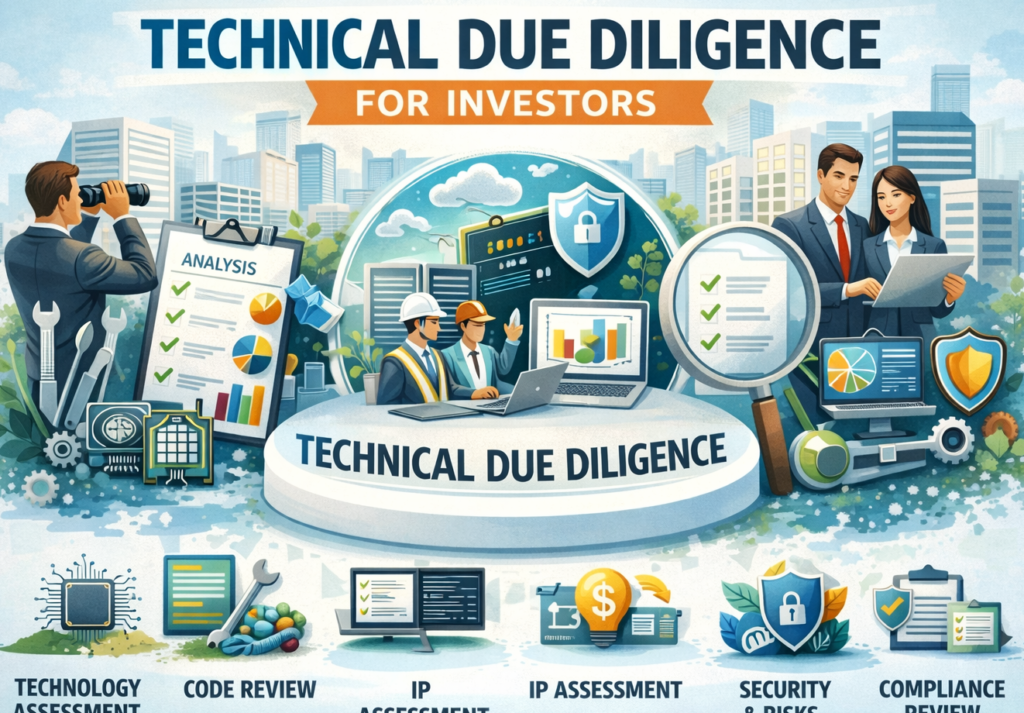

In today’s complex investment landscape, Technical Due Diligence for Investors in India has become a critical step for mitigating risks and ensuring informed decision-making. Whether evaluating infrastructure projects, industrial assets, or real estate developments, investors increasingly rely on technical due diligence consulting services to assess feasibility, compliance, and long-term viability.
However, selecting the right consultant can be challenging. With numerous firms offering technical due diligence services, investors must carefully evaluate expertise, methodology, and credibility to ensure reliable outcomes. This guide outlines the key factors to consider when choosing a technical due diligence consultant in India.
Understanding the Role of a Technical Due Diligence Consultant
Before selecting a consultant, it is essential to understand what technical due diligence consultant entails. It is a comprehensive assessment of a project’s technical, operational, and regulatory aspects. This includes:
- Evaluation of design and engineering standards
- Assessment of construction quality and project progress
- Review of regulatory approvals and compliance
- Analysis of operational efficiency and risks
- CAPEX and OPEX validation
A qualified consultant provides investors with actionable insights, enabling them to identify hidden risks and validate investment assumptions.
Key Factors to Consider When Choosing a Consultant
1. Industry Experience and Domain Expertise
One of the most important criteria is the consultant’s experience in your specific sector. Technical due diligence requirements vary significantly across industries such as:
- Real estate and construction
- Renewable energy
- Manufacturing and industrial projects
- Infrastructure and logistics
A consultant with domain-specific expertise will better understand industry benchmarks, technical risks, and regulatory frameworks in India. Always review past projects, case studies, and client portfolios to gauge their experience.
2. Comprehensive Service Offering
Reliable technical due diligence consulting services should cover the entire lifecycle of a project. Look for firms that provide:
- Pre-investment feasibility studies
- Design and engineering reviews
- Construction monitoring and site audits
- Regulatory compliance checks
- Risk assessment and mitigation strategies
A holistic approach ensures that no critical aspect is overlooked, giving investors a 360-degree view of the asset.
3. Understanding of Indian Regulatory Framework
India’s regulatory environment can be complex and varies across states. A competent consultant must have in-depth knowledge of:
- Local building codes and standards
- Environmental regulations and clearances
- Land acquisition laws
- Industry-specific compliance requirements
This is particularly important for Technical Due Diligence for Investors in India, where non-compliance can lead to project delays, penalties, or legal disputes.
4. Strong Analytical and Reporting Capabilities
The value of technical due diligence lies in how insights are presented. A good consultant should provide:
- Clear, structured, and data-driven reports
- Risk prioritization and impact analysis
- Practical recommendations for risk mitigation
- Transparent assumptions and methodologies
High-quality reporting enables investors to make confident and timely decisions.
5. On-Ground Assessment and Site Evaluation
Technical due diligence is not just a desk-based exercise. Physical site inspections play a crucial role in identifying:
- Construction quality issues
- Safety risks
- Project delays and deviations
- Infrastructure readiness
Ensure that the consultant has strong on-ground capabilities, including experienced engineers and local teams who can conduct detailed site visits across India.
6. Independence and Objectivity
Investors should prioritize consultants who maintain independence and neutrality. Avoid firms that may have conflicts of interest, such as those involved in project execution or development.
Objective technical due diligence services ensure unbiased evaluations, helping investors identify genuine risks rather than receiving overly optimistic assessments.
7. Use of Technology and Modern Tools
Leading consultants leverage advanced tools and technologies to enhance accuracy and efficiency, such as:
- GIS and location analysis tools
- Digital project monitoring platforms
- Data analytics for cost estimation and risk modeling
- Drone surveys and remote inspections
Technology-driven assessments provide deeper insights and improve the reliability of due diligence outcomes.
8. Reputation and Client Testimonials
Reputation is a strong indicator of credibility. Look for:
- Client testimonials and references
- Industry recognition or certifications
- Repeat engagements with institutional investors
Established firms with a proven track record in technical due diligence consulting services are more likely to deliver consistent and high-quality results.
9. Customization and Flexibility
Every investment is unique, and due diligence requirements can vary based on project size, sector, and investor objectives. A good consultant should offer:
- Tailored assessment frameworks
- Flexible engagement models
- Scalable solutions for different investment sizes
Avoid one-size-fits-all approaches, as they may overlook project-specific risks.
10. Cost vs. Value Consideration
While cost is an important factor, it should not be the sole deciding criterion. Low-cost services may compromise on depth and quality, leading to incomplete assessments.
Instead, focus on the value delivered—comprehensive analysis, actionable insights, and risk mitigation support. Investing in high-quality technical due diligence services can prevent costly mistakes in the long run.
Red Flags to Watch Out For
When selecting a consultant, be cautious of:
- Lack of transparency in methodology
- Limited industry experience
- Overly generic or templated reports
- Absence of on-site inspections
- Conflicts of interest
Identifying these red flags early can help investors avoid unreliable service providers.
Final Thoughts
Choosing the right consultant is a crucial step in ensuring effective Technical Due Diligence for Investors in India. A well-qualified consultant not only identifies risks but also enhances investment confidence by providing clear, data-backed insights.
By focusing on expertise, regulatory knowledge, comprehensive services, and objectivity, investors can select the right partner for their due diligence needs. In a rapidly evolving Indian investment ecosystem, robust technical due diligence is no longer optional—it is a strategic necessity for informed and successful investments.