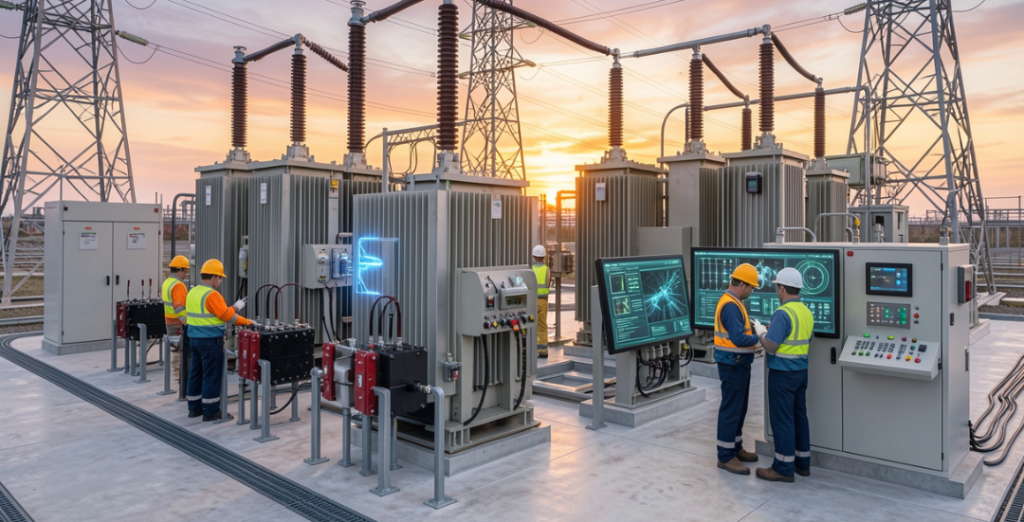

Modern utilities operate in an increasingly complex environment where reliability, efficiency, and safety are non-negotiable. As demand grows and renewable integration increases, utilities must ensure their networks remain stable under all conditions. This is where a comprehensive power system study becomes essential.
Electrical power system analysis is not just a technical requirement—it is a strategic tool that helps utilities optimize operations, reduce risks, and make informed investment decisions. From load flow analysis to fault studies and stability assessments, these evaluations provide critical insights into how a power network behaves under different scenarios.
Understanding Electrical Power System Analysis
Electrical power system analysis involves evaluating the performance of a power network using advanced simulation tools and engineering methods. It examines how electricity flows through the system, how equipment behaves, and how the network responds to disturbances.
A well-executed power system study typically includes load flow analysis, short circuit studies, protection coordination, and stability analysis. These assessments help engineers identify potential issues before they turn into costly failures.
For utilities, this means better planning, improved system performance, and enhanced decision-making capabilities.
Enhancing Grid Reliability and Stability
Reliability is the backbone of any utility operation. Power outages not only disrupt daily life but also result in significant financial losses. Through detailed power systems studies, utilities can predict and prevent potential system failures.
Load flow analysis ensures that voltage levels remain within acceptable limits, while stability studies evaluate how the system reacts to sudden disturbances such as faults or generator outages. By understanding these dynamics, utilities can design networks that withstand real-world challenges.
This proactive approach minimizes downtime and ensures a continuous power supply to consumers.
Improving Safety and Reducing Risks
Safety is a critical concern in power systems. Electrical faults, equipment failures, and improper protection settings can lead to dangerous situations for both personnel and infrastructure.
A comprehensive power system study helps identify fault levels and ensures that protective devices operate correctly. Short circuit analysis, for example, determines the maximum fault current in the system, allowing engineers to select appropriate equipment ratings.
Protection coordination studies further ensure that only the affected portion of the network is isolated during a fault, preventing widespread outages and reducing hazards.
By implementing these studies, utilities can significantly enhance operational safety and comply with industry standards.
Supporting Efficient Network Planning
As demand for electricity continues to grow, utilities must expand and upgrade their networks. However, expansion without proper analysis can lead to inefficiencies and increased operational costs.
Through detailed power systems studies, utilities can evaluate different expansion scenarios and choose the most cost-effective solution. These studies help determine optimal locations for new substations, transmission lines, and generation sources.
They also ensure that new additions integrate seamlessly with the existing network, maintaining system balance and performance.
Efficient planning not only saves costs but also improves long-term system reliability.
Enabling Renewable Energy Integration
The transition to renewable energy sources such as solar and wind presents new challenges for utilities. These energy sources are intermittent and can introduce variability into the grid.
Electrical power system analysis plays a crucial role in managing this transition. By conducting a thorough power system study, utilities can assess how renewable generation affects voltage levels, frequency stability, and power quality.
Advanced simulations allow engineers to design solutions such as energy storage systems, reactive power compensation, and grid upgrades. These measures ensure that renewable energy can be integrated without compromising system stability.
As a result, utilities can move toward sustainable energy goals while maintaining reliable operations.
Optimizing Operational Performance
Utilities must operate efficiently to remain competitive and meet regulatory requirements. Electrical power system analysis provides valuable insights that help optimize system performance.
Load flow studies identify overloaded lines and transformers, allowing operators to redistribute loads effectively. Loss analysis highlights areas where energy is being wasted, enabling targeted improvements.
By leveraging power systems studies, utilities can reduce technical losses, improve voltage profiles, and enhance overall system efficiency.
This leads to better service quality and lower operational costs.
Ensuring Regulatory Compliance
Utilities are required to meet strict regulatory standards related to safety, reliability, and performance. Failure to comply can result in penalties and reputational damage.
A comprehensive power system study helps utilities demonstrate compliance with these standards. It provides documented evidence of system performance, protection coordination, and fault handling capabilities.
Regular analysis also ensures that the network remains compliant as it evolves over time.
This not only protects the utility from regulatory risks but also builds trust with stakeholders and customers.
Conclusion
Electrical power system analysis is a vital component of modern utility operations. It enables utilities to maintain reliability, enhance safety, and optimize performance in an increasingly complex energy landscape.
By investing in detailed power systems studies, utilities can identify potential issues, plan effectively, and integrate new technologies with confidence. Whether it’s improving grid stability, supporting renewable energy, or ensuring compliance, these studies provide the foundation for smarter decision-making.
In today’s fast-changing energy sector, a proactive approach to system analysis is not just beneficial—it is essential for long-term success.