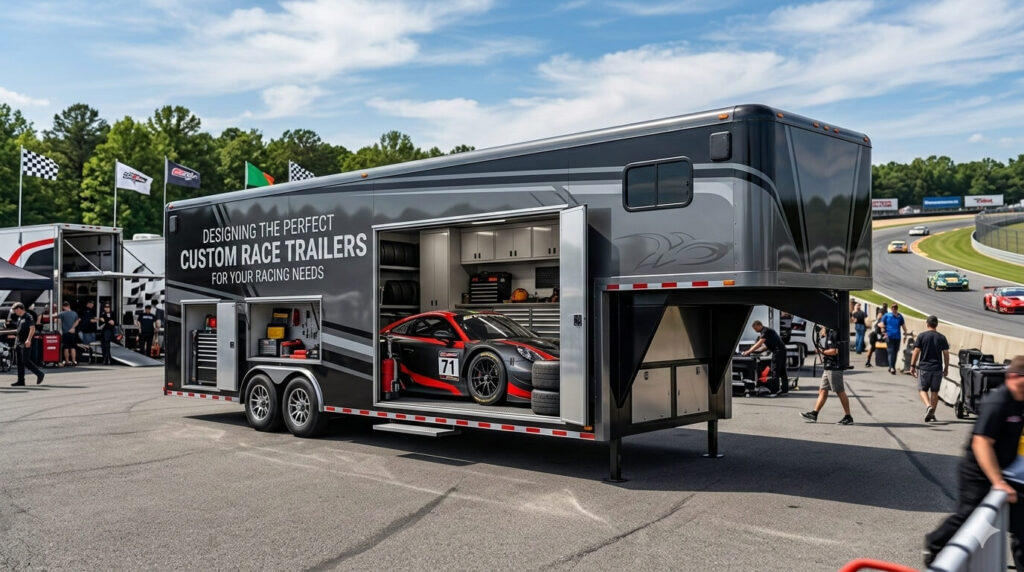

Racing people are a little different. Anyone who has spent time around a track knows that. The smell of fuel in the morning, the sound of tools clanking in a trailer before sunrise… it becomes part of life. And after a few race weekends, one thing becomes obvious pretty quickly: the trailer you haul your car in matters more than most people expect.
Right in the middle of planning your setup, the idea of custom race trailers starts popping up. Not the generic box trailer you grabbed years ago. Something built around your actual racing routine — the car, the gear, the late-night wrenching sessions in the paddock.
Because racing gear piles up fast. Spare tires. Fuel jugs. Jack stands. Tool chests. That one box of random bolts nobody throws away. It adds up.
And if your trailer isn’t designed around that chaos… race day turns into a scavenger hunt.
Every Racer Uses Their Trailer Differently
Spend five minutes in a pit lane and you’ll notice something funny. No two setups look the same.
A drag racer organizes space completely differently from a motocross team. A dirt track racer might care more about quick tire access. A road racer might want room to work inside during long weekends.
That’s why many racers start looking at race car trailers with living quarters, or at least a workspace area. Somewhere to escape the heat. Somewhere to tighten a bolt without kneeling in gravel.
Some teams add fold-down cabinets. Others want a tire rack across the nose. A few people even build tiny workbenches along the wall. I saw one trailer once with LED lighting under every cabinet. A little over the top, maybe. Still cool.
Point is… your trailer should match the rhythm of your racing life.
Size Matters More Than People Expect
A common mistake new racers make? Buying a trailer that barely fits the car.
At first it feels fine. Then the gear starts multiplying.
Suddenly the floor space disappears. Now you’re stacking wheels awkwardly against the wall. The generator slides around during the drive. And every time you unload the car, half the equipment has to come out first.
That’s why many experienced racers go straight for enclosed race car trailers around 24 to 32 feet long. That extra space sounds excessive… until race weekend arrives.
Room to move around changes everything.
You can walk around the car. Store equipment properly. Set up cabinets or tire racks without feeling cramped.
Also, longer trailers tow smoother on highways. That part surprised me the first time someone explained it.
Loading the Car Should Feel Easy
If loading your race car feels stressful every time, something’s wrong.
The ramp angle matters a lot. Cars with low clearance — especially road racing builds — scrape easily if the door height or ramp length isn’t right.
Many racers add:
-
Extended ramp doors
-
Beavertail rear floors
-
Low-angle loading ramps
-
Non-slip flooring
These little details make loading calmer. No grinding noises. No spotter yelling “STOP!” every five seconds.
A good race car hauler trailer should make loading feel almost routine. Back up, open the door, drive in.
Done.
Storage Makes or Breaks Race Day
Storage inside race trailer cabinets and storage systems sounds like a small detail. It isn’t.
Anyone who has raced for a while knows the frustration of losing tools during a busy weekend. You set down a wrench somewhere… and suddenly it vanishes.
Dedicated cabinets fix that problem.
Upper cabinets hold fluids and small parts. Lower cabinets carry heavier tools. Tire racks keep wheels off the floor. Some teams mount pit carts near the side door so they slide right out.
There’s something satisfying about opening a trailer door and seeing everything lined up neatly. Almost calming.
Well… until the race starts.
Think About Power and Lighting
Tracks get dark earlier than people think.
Late-night repairs happen constantly. A belt breaks. A suspension piece bends. Suddenly you’re working under a flashlight.
Better lighting inside a professional race car trailer makes a huge difference. Ceiling LEDs brighten the whole space. Wall lights near the workbench help with small tasks.
Many racers also add:
-
Generator compartments
-
Shore power hookups
-
Interior outlets
-
Battery systems
Once you’ve worked in a properly lit trailer, you never want to go back to dim lighting again.
Trust me on that one.
A Little Comfort Goes a Long Way
Not every racer wants living quarters. Some do. Some don’t care.
Still… small comfort upgrades can change a long race weekend.
Things like:
-
Roof vents or fans
-
Insulated walls
-
Fold-down seating
-
A tiny fridge
Even a simple couch in the front of a car hauler trailer for racing gives drivers a place to sit between runs. Hydrate. Check lap data. Catch their breath.
Racing days are long. Anything that makes downtime easier helps.
Branding the Trailer
Race trailers also turn into rolling billboards.
Teams wrap their race team trailers with sponsor logos, bold colors, and big car graphics. It draws attention in the pits and on the highway.
Some people go subtle. Clean black trailer, small logos.
Others go full race-team style with giant graphics down both sides. Hard to miss those.
Sponsors love it, honestly. The trailer gets seen everywhere.
Build It Around Your Routine
Every racer develops their own system over time.
Where tools go. Where tires sit. Which side the generator lives on. Which cabinet holds spare sensors or spark plugs.
The right custom race trailers are built around that routine rather than forcing you to adapt.
Think about how you unload. Where you stand while working. How many spare tires you carry. Whether crew members need room to move around.
Sketch the layout if needed. Some racers even mark things out with tape on the garage floor first. It looks silly… yet it helps visualize the space.
Once the trailer arrives and everything has its place, race weekends start feeling smoother.
Less scrambling. Less digging through boxes.
More focus on the track.
And honestly… that’s the whole point.