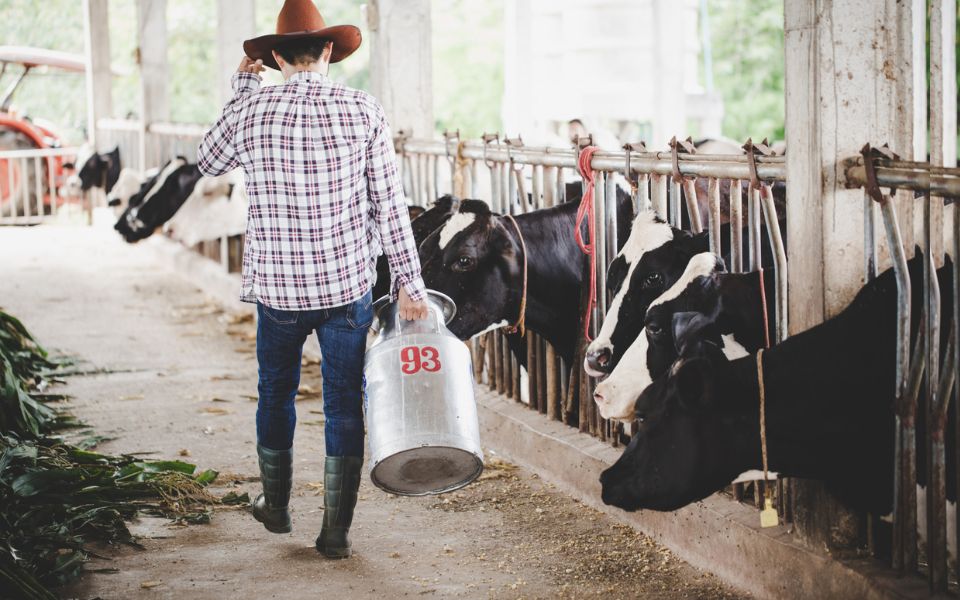

Dairy manufacturing is one of the most operationally complex segments of the food industry. Unlike standard manufacturing, dairy businesses operate with perishable raw materials, variable supply quality, tight regulatory controls, and high-frequency financial settlements—often all within the same day.
Yet many dairy manufacturers still rely on disconnected systems: spreadsheets for milk procurement, standalone accounting software, separate quality tools, and manual coordination between plants, warehouses, and distributors. The result is poor visibility, avoidable losses, compliance risk, and slow decision-making.
This is where ERP software for dairy manufacturers becomes critical—not as a generic enterprise system, but as a vertically aligned platform designed to manage dairy operations from farm to shelf in one integrated environment.
Why Generic ERP Falls Short for Dairy Operations
Traditional ERP systems are built for discrete or process manufacturing with predictable inputs. Dairy manufacturing is neither.
Milk procurement volumes fluctuate daily. Quality parameters change by supplier and season. Shelf life is short. Pricing models vary across procurement, wholesale, and direct distribution. Regulatory reporting requires traceability at batch and lot level.
Generic ERP systems struggle because they:
-
Treat milk like a standard raw material
-
Lack native milk collection and quality workflows
-
Do not handle yield variance and by-product accounting well
-
Require heavy customization for compliance and traceability
A dairy ERP system is purpose-built to address these realities without forcing operations to adapt to rigid software logic.
What a Dairy ERP Actually Covers (End-to-End)
A modern dairy ERP is not just accounting or inventory software. It is an operational backbone that connects every stage of the dairy value chain.
1. Milk Procurement and Farm Integration
The first point of complexity begins at milk collection.
A dairy ERP enables:
-
Digital milk collection entries at procurement centers
-
Automated quality parameter capture (FAT, SNF, temperature)
-
Supplier-wise pricing and incentive calculations
-
Instant settlement and payment reconciliation
-
Centralized farmer or supplier profiles
This eliminates manual registers and reduces disputes, leakage, and delayed payments.
2. Production Planning and Yield Management
Dairy production involves continuous processes with variable outputs. ERP systems designed for dairy account for this variability instead of ignoring it.
Key capabilities include:
-
Batch-wise production tracking
-
Recipe and BOM management with yield variance
-
Real-time consumption vs output monitoring
-
Wastage, loss, and by-product accounting
-
Shelf-life tracking from production date
This level of visibility helps manufacturers understand true cost per SKU and optimize production schedules.
3. Quality Control and Traceability
Food safety is non-negotiable in dairy manufacturing.
A dairy manufacturing ERP embeds quality checks directly into workflows:
-
Inward, in-process, and final quality checkpoints
-
Lab test result logging and approvals
-
Batch-level traceability from raw milk to finished goods
-
Recall readiness with instant backward and forward tracing
Instead of preparing for audits reactively, compliance becomes a byproduct of daily operations.
4. Inventory, Cold Chain, and Distribution
Managing cold-chain inventory across plants, depots, and distributors is where most dairy losses occur.
ERP for dairy industry operations provides:
-
Real-time stock visibility across locations
-
FIFO and expiry-based dispatch rules
-
Temperature-sensitive inventory tracking
-
Route-wise dispatch and delivery planning
-
Returns and expiry reconciliation
This reduces spoilage, improves service levels, and protects margins.
5. Finance, Billing, and Cost Control
Finance in dairy is deeply intertwined with operations. ERP systems that separate the two create reporting delays and inaccuracies.
A dairy ERP integrates:
-
Procurement settlements and accounting
-
Route-wise and customer-wise billing
-
SKU-level cost and margin reporting
-
Tax, subsidy, and compliance calculations
-
Multi-plant and multi-entity financial consolidation
This allows finance teams to close books faster while maintaining operational accuracy.
Why Single-System Visibility Matters
When data flows through one ERP system instead of multiple tools, dairy manufacturers gain something more valuable than automation: decision clarity.
With a unified dairy ERP:
-
Operations teams see real-time production and losses
-
Quality teams detect deviations early
-
Finance teams track margins daily, not monthly
-
Leadership gets a single source of truth
This is especially critical for scaling operations, launching new SKUs, or expanding distribution networks.
ERP as a Foundation for Analytics and AI
ERP data is not just transactional—it is strategic.
Modern dairy ERP platforms enable:
-
Demand forecasting based on historical sales
-
Yield optimization through production analytics
-
Predictive maintenance using equipment data
-
Price and promotion performance analysis
Without a clean ERP backbone, advanced analytics and AI initiatives remain theoretical.
Cloud-Based Dairy ERP vs On-Premise Systems
Many dairy manufacturers still operate legacy on-premise systems due to concerns around reliability and control. However, cloud-native ERP platforms now offer significant advantages:
-
Faster deployment and upgrades
-
Lower infrastructure and maintenance costs
-
Remote access for field and plant teams
-
Easier integration with IoT, BI, and partner systems
For growing dairy businesses, cloud ERP provides agility without sacrificing control.
Key Considerations When Selecting Dairy ERP Software
Not all ERP vendors understand dairy operations. Before selecting a platform, manufacturers should evaluate:
-
Native support for milk procurement workflows
-
Batch-level traceability and compliance readiness
-
Yield, wastage, and by-product accounting
-
Scalability across plants and regions
-
API and integration capabilities
-
Vendor domain expertise in dairy manufacturing
Choosing the wrong system can lock operations into years of workarounds.
The Strategic Role of Dairy ERP in Competitive Markets
As competition increases and margins tighten, operational efficiency becomes a differentiator.
A well-implemented dairy ERP helps manufacturers:
-
Reduce leakage and spoilage
-
Improve farmer and supplier relationships
-
Maintain consistent product quality
-
Respond faster to market demand
-
Scale operations without chaos
Platforms such as dairy ERP solutions are increasingly being adopted to unify dairy operations, improve traceability, and drive margin control across the value chain.
Conclusion
ERP software for dairy manufacturers is no longer a back-office tool. It is a strategic system that connects procurement, production, quality, finance, and distribution into one operational view.
For dairy businesses aiming to scale sustainably, maintain compliance, and protect margins, investing in a purpose-built dairy ERP is not optional—it is foundational.
The real transformation begins when every litre of milk is tracked, valued, and optimized from farm to shelf within a single system.