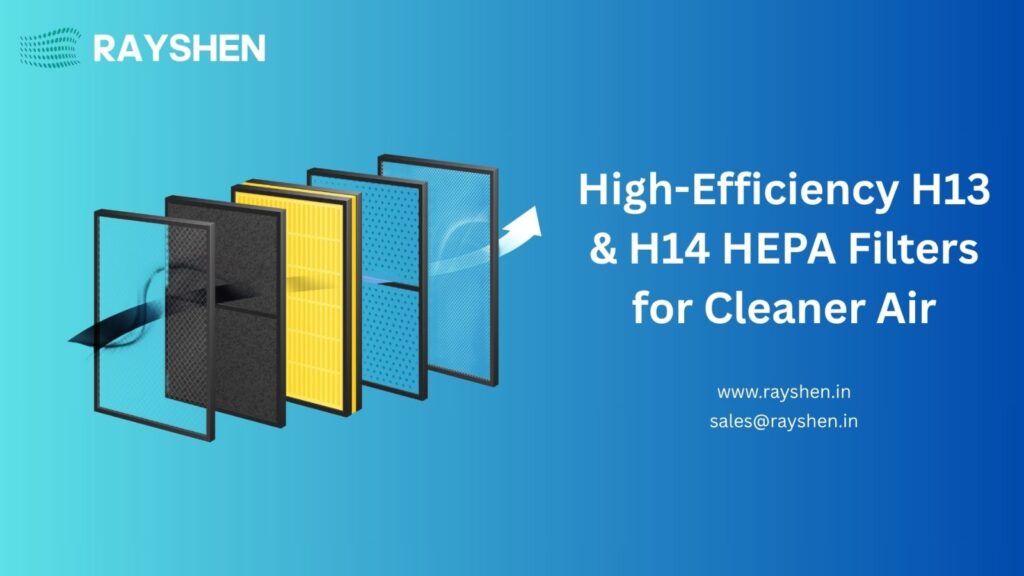

In today’s world, air quality has become a critical factor for both industrial and commercial environments. From pharmaceutical manufacturing to data centers, hospitals, and laboratories, clean air is essential for protecting products, equipment, and human health. One of the most trusted technologies for achieving superior air quality is the hepa filter. At Rayshen, we provide advanced air filtration solutions that help businesses maintain the highest standards of cleanliness and safety.
What Is a HEPA Filter?
A hepa (High Efficiency Particulate Air) filter is a type of air filter designed to capture extremely small particles from the air. By definition, a true HEPA filter can remove at least 99.97% of airborne particles as small as 0.3 microns. This includes dust, pollen, bacteria, mold spores, and other harmful contaminants.
Unlike conventional air filters, HEPA filters use a dense network of fibers that trap particles through diffusion, interception, and impaction. This makes them highly effective in environments where even microscopic contamination can cause serious issues.
Why HEPA Filters Are Essential in Industrial and Commercial Spaces
Industrial and commercial facilities often deal with sensitive processes and valuable equipment. Poor air quality can lead to product defects, health risks, and equipment damage. HEPA filters ensure a controlled environment by constantly removing airborne pollutants.
Some key benefits include:
- Improved indoor air quality
- Protection of sensitive products and machinery
- Reduced risk of contamination
- Compliance with industry regulations
For example, in pharmaceutical manufacturing, HEPA filtration prevents microbial contamination during drug production. In electronics, it protects delicate components from dust that could cause system failures.
Applications of HEPA Filters
HEPA filters are widely used across various sectors:
Pharmaceutical and Healthcare
In hospitals and pharmaceutical plants, HEPA filters are used in operation theaters, laboratories, and sterile manufacturing areas. They help maintain infection control and ensure patient safety.
Electronics and Semiconductor Manufacturing
Even a tiny particle can damage microchips and circuit boards. HEPA filters create ultra-clean environments, reducing production losses and increasing product reliability.
Commercial Buildings and Offices
Modern commercial spaces use HEPA filters to improve indoor air quality, creating healthier workplaces and enhancing employee productivity.
Food and Beverage Processing
Clean air is vital to prevent contamination in food production. HEPA filters help maintain hygiene and extend product shelf life.
HEPA Filters and Clean Room Equipment
HEPA filters are a core component of clean room equipment. Cleanrooms rely on continuous air purification to maintain strict environmental standards. HEPA filters are installed in air handling units, ceiling modules, and laminar airflow systems to ensure clean air flows throughout the workspace.
At Rayshen, we integrate HEPA filters into complete cleanroom solutions, combining them with advanced monitoring and airflow control systems. This ensures consistent performance and regulatory compliance.
Role of FFU and Fan Filter Units
An ffu or fan filter unit is a compact device that combines a fan and HEPA filter into a single system. FFUs are commonly used in modular cleanrooms and localized filtration setups.
Key advantages of FFUs include:
- Energy-efficient operation
- Uniform airflow distribution
- Easy installation and maintenance
- Low noise levels
Rayshen’s fan filter unit systems are designed to provide high filtration efficiency while minimizing energy consumption. They are ideal for facilities that require flexible and scalable air purification solutions.
How to Choose the Right HEPA Filter
Selecting the right HEPA filter depends on several factors:
- Type of application (industrial, commercial, or healthcare)
- Required air cleanliness level
- Airflow capacity
- Installation environment
For example, a pharmaceutical cleanroom requires stricter filtration standards compared to a commercial office. Rayshen experts assess your facility’s needs and recommend the most suitable HEPA filtration systems for optimal performance.
Maintenance and Performance Tips
To ensure long-term efficiency, HEPA filters must be properly maintained. Over time, filters become clogged with particles, reducing airflow and effectiveness.
Best practices include:
- Regular inspection and replacement
- Monitoring pressure drop across filters
- Keeping surrounding equipment clean
- Using certified replacement filters
Rayshen provides maintenance support and genuine replacement filters to help clients maintain consistent air quality without operational disruptions.
Future of HEPA Filtration Technology
With increasing focus on health, safety, and sustainability, HEPA filtration technology continues to evolve. Smart sensors, automated monitoring, and energy-efficient designs are becoming more common. Modern HEPA systems can now integrate with building management systems for real-time performance tracking.
Rayshen remains at the forefront of innovation, offering next-generation HEPA solutions that balance high performance with reduced energy consumption.
Conclusion
A hepa filter is more than just an air purifier—it is a critical investment in safety, quality, and efficiency. Whether in pharmaceuticals, electronics, healthcare, or commercial buildings, HEPA filtration ensures clean air and reliable operations.
With comprehensive solutions from Rayshen, businesses can confidently meet regulatory requirements, protect valuable assets, and create healthier environments. By choosing the right HEPA filter systems today, you secure cleaner air and a stronger future for your organization.