Dreaming of the neon lights in Tokyo, the serene temples of Kyoto, or the majestic sight of Mount Fuji? For Indonesian travelers, these dreams are closer than ever. Japan remains one of the top destinations for Indonesians, and with the introduction of the electronic visa (eVisa) system, the application process has been modernized to suit the needs of the digital traveler.
If you are planning a trip to the Land of the Rising Sun, this guide covers everything you need to know about the Japan eVisa for Indonesians—from document requirements to choosing the right processing speed.
What is the Japan eVisa for Indonesian Citizens?
The Japan eVisa is a digital authorization that allows eligible Indonesian citizens to enter Japan for short-term tourism. Unlike the traditional sticker visa that requires a visit to the embassy or consulate, the eVisa is issued electronically, saving you time and physical trips to the visa center.
Key Details of the eVisa:
Visa Type: Tourism / Single Entry
Validity: Up to 90 days from the date of issue.
Stay Duration: Allows for a stay of up to 15 days or 90 days (depending on approval).
Entry Method: You must display your “Visa Issuance Notice” on your mobile device upon arrival at the airport.
How Long is the Japan eVisa Processing Time in Indonesia?
One of the most common questions travelers ask is: “How to get a Japan visa quickly?” Since post-pandemic travel has surged, processing times can vary based on the volume of applications. To cater to different travel timelines and urgent needs, Japan-eVisa.info offers three distinct processing tiers:
Standard Processing: 26 – 32 Working Days. (Best for those planning their cherry blossom or autumn trips well in advance).
Rush Processing: 20 – 26 Working Days. (Ideal for travelers who have their tickets booked and about a month to go).
Super Rush Processing: 14 – 20 Working Days. (The fastest option available for last-minute business or leisure trips).
Pro Tip: We always recommend applying at least 6-8 weeks before your intended departure to account for any unexpected public holidays or additional document requests.
What Documents are Required for a Japan eVisa Application?
Preparation is the key to a successful, stress-free application. To apply for your Japan eVisa from Indonesia, you will generally need to have digital copies of the following Japan visa document requirements:
Valid Passport: Your ordinary Indonesian passport must be valid for at least 6 months beyond your intended stay.
Digital Photograph: A recent, high-quality color photo taken within the last 6 months with a plain white background.
Proof of Residence: A clear copy of your KTP (Kartu Tanda Penduduk).
Flight Itinerary: Confirmed proof of your round-trip flight bookings.
Travel Schedule: A daily breakdown of your planned activities in Japan (often called the “Itinerary in Japan”).
Financial Proof: Recent bank statements showing consistent transactions and sufficient funds to cover your travel and accommodation expenses.
Can I Use Google Pay (GPay) for Payments While Traveling in Japan?
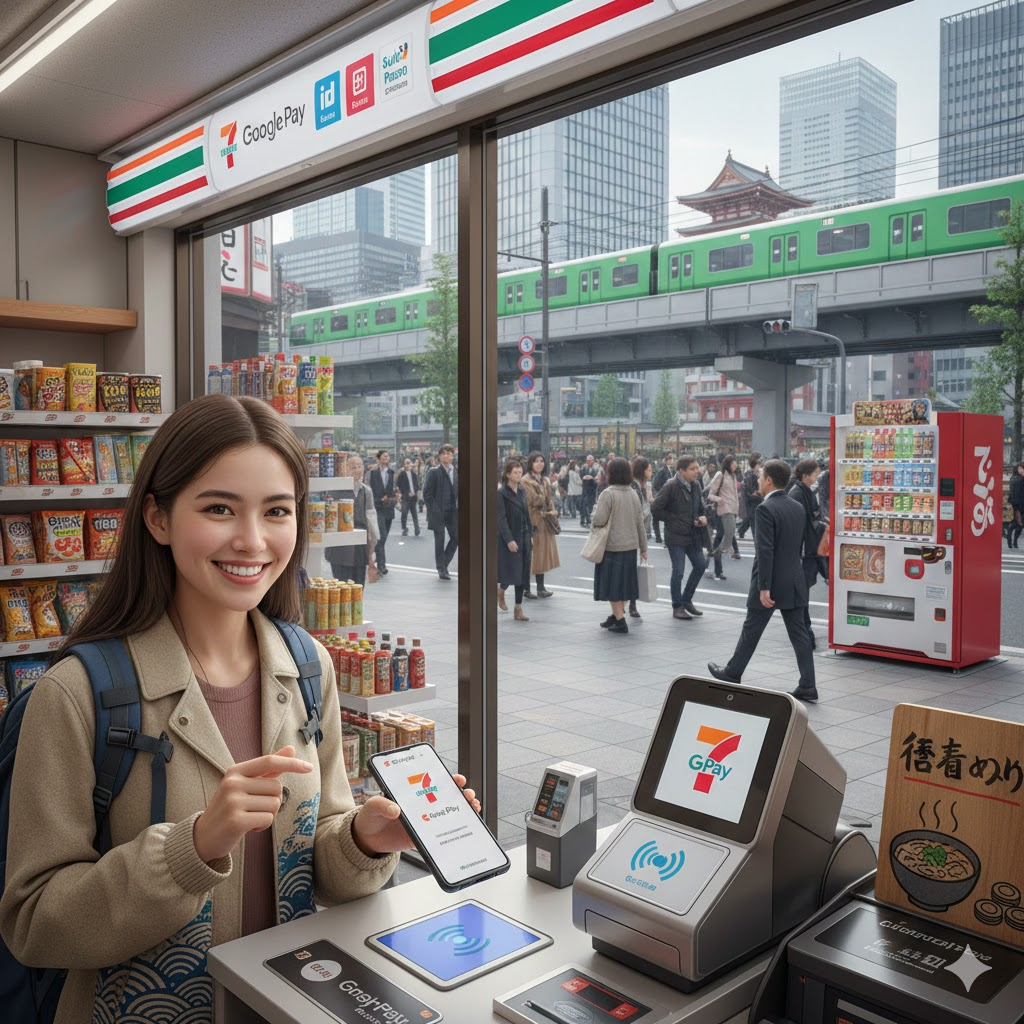
Digital payments are booming in Japan! You can use Google Pay (GPay) at most major convenience stores (like 7-Eleven, Lawson, and FamilyMart), department stores, and even many vending machines.
How it works: GPay works at terminals displaying the “Contactless” or “Wave” symbol.
Transit Tip: If your phone supports FeliCa technology (common in many global Android flagships), you can even link a Suica or Pasmo card to your Google Wallet for seamless train and bus travel.
Backup Plan: While GPay is widely accepted in cities like Tokyo and Osaka, small ramen shops or rural temples often remain “Cash Only,” so always keep some Yen on hand!
Why Should I Choose an Expert Agent for My Japan eVisa?
While you can technically navigate the application yourself, many travelers find the official portals confusing or prone to technical glitches. Using a dedicated platform like Japan-eVisa.info provides several layers of security and convenience that ensure your holiday plans stay on track:
Effortless Application: Our forms are designed to be user-friendly, stripping away the complex jargon found on government sites.
Error-Free Forms: Even a small typo on your passport number or a blurred photo can lead to an immediate rejection. Our specialists review every detail to ensure 100% accuracy.
Streamlined Documents: You can upload documents in various formats; we handle the resizing and verification to meet strict embassy standards.
24/7 Support: Whether you have questions at midnight or need help via WhatsApp and Live Chat, our team is always ready to assist.
Which Japanese Airports are the Best for eVisa Entry?
Most Indonesian travelers fly into one of Japan’s major international hubs. When arriving with an eVisa, you should target these top-tier airports for a smoother immigration experience:
Narita (NRT) & Haneda (HND): Serving the Tokyo area, these are the primary gates for international visitors.
Kansai International (KIX): The best choice if you are heading straight to Osaka, Kyoto, or Universal Studios Japan.
Chubu Centrair (NGO): Ideal for exploring Nagoya and the Japanese Alps.
Fukuoka (FUK): A great entry point for the southern island of Kyushu.
Note: The eVisa “Visa Issuance Notice” system is well-integrated at these major hubs, ensuring your digital verification is handled quickly.
Can I Use My Japan eVisa for Land or Sea Entry?
The Japan eVisa system is primarily designed for travelers arriving by air. While Japan is an island nation without traditional “land borders,” there are international ferry services (e.g., from Busan, South Korea). However, it is important to confirm that the specific seaport supports the digital “Visa Issuance Notice” verification. For 99% of Indonesian tourists, arriving via a scheduled international flight is the most secure and recommended way to use your eVisa.
What are the Hotel Stay Rules for Tourists in Japan?
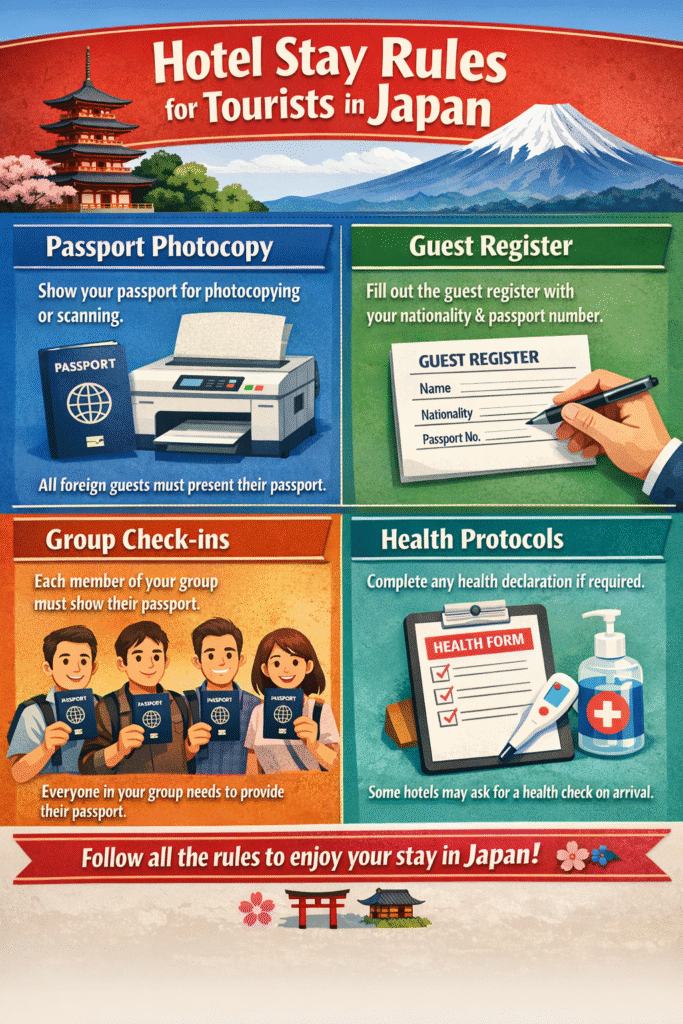
Japan has strict regulations regarding accommodation for foreign visitors. When checking into a hotel, ryokan, or licensed Airbnb, you must follow these rules:
Passport Photocopy: By law, all foreign guests without a residential address in Japan must present their passport. The hotel is required to take a photocopy or digital scan of your photo page.
Guest Register: You must accurately fill out the guest register, including your nationality and passport number.
Group Check-ins: If you are traveling as a group, every single member must provide their passport—not just the person who made the booking.
Health Protocols: While COVID-19 rules have eased, some hotels may still ask for a basic health declaration upon arrival.
Is the Japan Visa-Free Entry for E-Passport Holders Still Available?
Yes, Indonesian citizens holding a biometric E-Passport (the one with the electronic chip symbol on the cover) can still apply for a “Visa Waiver Registration.” However, it is important to note the differences:
Visa Waiver: Usually restricted to 15-day stays and requires a specific registration process.
eVisa: The primary route for those with standard passports or those who want a more formal tourism visa that can potentially allow for longer durations.
Can I Apply for a Japan eVisa if I Plan to Stay Longer Than 15 Days?
The standard tourism eVisa is typically issued for a stay of up to 15 days. However, depending on your financial standing and travel history, it can sometimes be issued for up to 90 days. If you are planning a very long-term stay for work, digital nomadism, or study, the eVisa is not the right choice; you must apply for a specific long-term visa category through the Japanese Embassy in Jakarta or the nearest Consulate.
Do I Need to Print My Approved Japan eVisa?
This is a critical point: No. Japanese immigration has moved toward a “live” digital check. Upon arrival at the airport in Japan, you are required to log in to the eVisa system on your smartphone and show the “Visa Issuance Notice.”
Note: A simple screenshot or a printed PDF is often not accepted as the primary proof by airline staff or immigration officers. You must have internet access to show the live notice.
What Happens if My Japan eVisa Application is Rejected?
If an application is rejected, the Japanese embassy typically does not provide a specific reason for the denial. Common reasons usually include insufficient funds, inconsistent itineraries, or errors in the application form. This is exactly why we recommend our Expert Review service—it significantly boosts your approval odds by catching mistakes before they reach the embassy.
How Can I Recover a Lost Japan eVisa?
One of the biggest benefits of using our service is “Peace of Mind.” If you accidentally delete your confirmation email or lose the PDF file, you don’t need to panic. Your approved eVisa can be recovered quickly through our system using just your passport information and basic personal details.