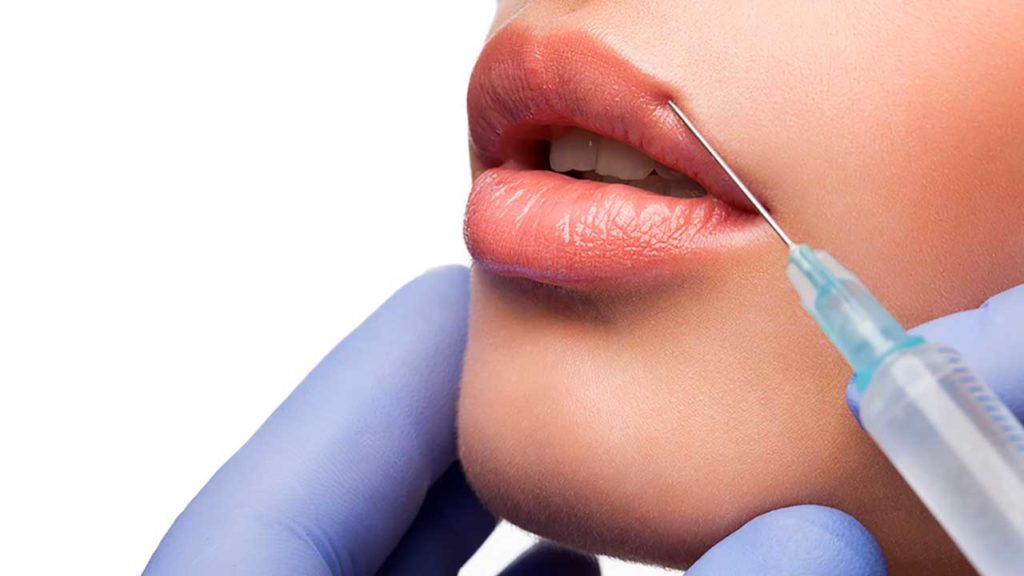

Lip fillers have surged in popularity over the past decade, transforming the beauty landscape with fuller, plumper lips now seen as a standard of aesthetic appeal.
But behind the glossy results lies a sophisticated combination of chemistry, biology, and medical precision. Understanding the science behind lip fillers not only demystifies the procedure but also helps patients make informed decisions about their cosmetic goals.
What Are Lip Fillers?
Lip fillers, often referred to as dermal fillers, are injectable substances designed to add volume, shape, and definition to the lips. The most commonly used fillers are based on hyaluronic acid (HA), a naturally occurring molecule in the human body.
HA plays a critical role in maintaining skin hydration, elasticity, and overall volume by binding water molecules. This makes it ideal for cosmetic applications, as it enhances volume without triggering significant immune reactions.
Other types of fillers exist, including collagen-based or synthetic options, but HA fillers dominate the market due to their safety profile, reversibility, and natural-looking results.
The Chemistry of Hyaluronic Acid
Hyaluronic acid is a glycosaminoglycan—a long chain of sugar molecules found in connective tissues throughout the body. In the lips, HA naturally diminishes with age, leading to a loss of volume, dryness, and fine lines. By injecting HA fillers, practitioners restore hydration and fullness, mimicking youthful tissue.
HA fillers are formulated in varying consistencies or viscosities, often referred to as “soft” or “firm” gels. Soft gels are ideal for subtle enhancement and smoothing fine lines, while firmer gels provide structure and pronounced volume.
The filler’s chemical structure is often cross-linked, meaning the HA molecules are chemically bonded to each other. This cross-linking slows down natural degradation, allowing the filler to last anywhere from 6 to 18 months depending on the product and individual metabolism.
How Lip Fillers Work Biologically
When HA filler is injected, it acts as a scaffold beneath the skin. The molecule’s ability to attract and hold water leads to immediate hydration and expansion of the surrounding tissues. This is why patients notice instant plumping. Additionally, HA fillers interact with the extracellular matrix of the skin—a network of proteins and molecules that provide structural support. This interaction stimulates mild collagen production over time, further enhancing the lip’s appearance and skin quality.
The body eventually metabolizes HA fillers naturally. Enzymes such as hyaluronidase break down the HA molecules into smaller sugars that are absorbed into the bloodstream. This natural degradation process ensures that the filler is temporary, allowing adjustments or reversals as desired.
Injection Techniques: More Than Just a Pinch
The success of fillers depends heavily on the technique used by the injector. Precision is key, as the lips contain delicate structures, including blood vessels, nerves, and muscles responsible for expression and movement.
Common techniques include:
Linear threading – The filler is injected in a line along the lip border or body to create even volume.
Serial puncture – Small dots of filler are placed strategically to achieve natural contouring.
Fanning or cross-hatching – Multiple injections in a fan-like pattern create smooth, blended results.
Modern practices often combine these techniques to sculpt the lips while minimizing swelling and bruising. Experienced practitioners also consider lip anatomy, symmetry, and proportions, aiming for harmony with the rest of the face rather than just size.
Safety and Reversibility
One of the standout features of HA fillers is their reversibility. If a patient is unhappy with the results, hyaluronidase can be injected to dissolve the filler safely. This reversibility, along with HA’s biocompatibility, contributes to the procedure’s strong safety record.
Like any medical procedure, fillers carry some risks, including swelling, bruising, lumps, or asymmetry. Rare but serious complications can occur if a filler is inadvertently injected into a blood vessel, potentially causing tissue damage. This highlights the importance of selecting a trained medical professional who understands the vascular anatomy of the lips.
The Role of Technology in Enhancing Results
Recent advances in filler technology have expanded options for patients. Newer formulations may include lidocaine, a mild anesthetic, to reduce discomfort during the procedure. Some HA fillers are also engineered with varying particle sizes to provide a more natural look and feel.
Additionally, imaging technology and mapping tools are sometimes used to plan injections, ensuring symmetrical results and minimizing the risk of complications. These tools allow practitioners to tailor treatments to the unique contours of each patient’s lips, taking the artistry and science of lip augmentation to a new level.
The Science of Longevity and Maintenance
While fillers are temporary, their duration can vary widely. Factors influencing longevity include the type of filler, injection depth, metabolic rate, lifestyle factors, and environmental conditions. For example, smoking, sun exposure, and high physical activity can accelerate the breakdown of HA.
Patients typically schedule touch-ups every 6–12 months to maintain results. Interestingly, repeated treatments can stimulate natural collagen and elastin production, which may enhance the lip’s texture and firmness even between filler sessions.
Beyond Aesthetics: Functional Benefits
While the primary motivation for chin fillers is cosmetic, there are functional benefits as well. Enhanced hydration from HA fillers can improve lip texture and reduce fine lines, while structural support can balance lip asymmetry caused by age or congenital factors. In some cases, fillers are used to restore lip volume lost due to trauma, surgery, or medical conditions, blending aesthetic and reconstructive applications.
Psychological Impact and the Science of Perception
Science also extends beyond biology: perception plays a major role in satisfaction with chin fillers. Studies show that facial attractiveness is linked to symmetry, proportion, and balance. By enhancing lip volume in harmony with facial features, fillers can improve perceived youthfulness and self-confidence. The psychological impact is real, demonstrating how science, artistry, and human perception intersect in cosmetic treatments.
Conclusion
Lip fillers represent a fascinating intersection of chemistry, biology, and medical artistry. By leveraging the natural properties of hyaluronic acid, skilled practitioners can restore volume, hydration, and youthful contours with remarkable precision.
Understanding the underlying science—from the molecular structure of HA to the anatomical intricacies of the lips—helps demystify the procedure and underscores the importance of professional expertise.
As research and technology continue to advance, chin fillers are likely to become even more sophisticated, offering personalized, safe, and aesthetically pleasing outcomes. Whether pursued for beauty, balance, or restoration, the science behind fillers ensures that these subtle enhancements are as safe and effective as they are transformative.