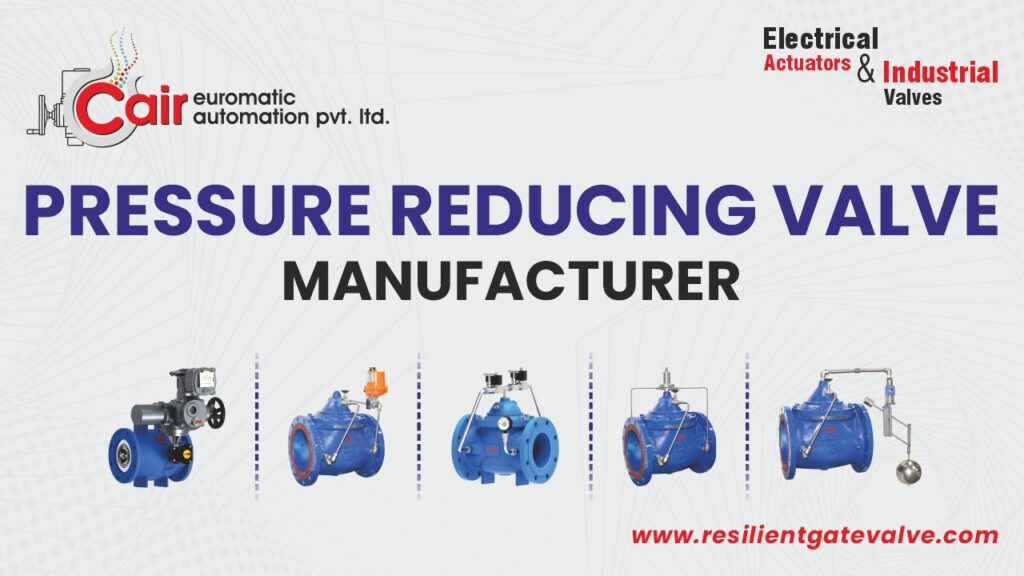

In real-world pipeline systems, pressure is never constant. Demand changes, elevation differences, pump variations, and operating conditions all affect pressure levels. Without proper control, excessive pressure can damage pipelines, fittings, and equipment. This is why pressure reducing valves are considered one of the most critical components in water supply and industrial systems.
Unlike textbook examples, real installations demand valves that can handle fluctuating pressure, harsh environments, and long operating hours. At Cair, valves are engineered with practical site conditions in mind—designed not just to work on paper, but to perform reliably in the field.
This article explains how pressure reducing valves are designed for real-world applications, how they work with other valves, and why engineers rely on proven manufacturers.
Understanding Pressure Reducing Valves in Practical Systems
A pressure reducing valve automatically lowers high inlet pressure to a safe, steady outlet pressure. The key advantage is that it maintains the desired downstream pressure even when upstream pressure or flow demand changes.
In real-world applications such as municipal water supply, industrial plants, and high-rise buildings, pressure fluctuations are unavoidable. A well-designed pressure reducing valve absorbs these variations and protects the system without requiring manual adjustment.
This is why selecting the right Pressure Reducing Valve manufacturer is essential. Quality design, accurate pressure control, and durable materials make a significant difference over years of operation.
Why Real-World Applications Need Robust PRV Design
In actual field conditions, valves face challenges such as:
-
Continuous operation for long hours
-
Dirty or untreated water
-
Pressure surges and sudden demand changes
-
Outdoor installation with temperature variations
-
Limited maintenance access
A pressure reducing valve designed for real-world use must be strong, stable, and dependable. Cair focuses on designs that deliver consistent performance even in demanding environments.
How Pressure Reducing Valves Work on Site
In simple terms, a pressure reducing valve works by balancing downstream pressure against a preset spring or pilot system.
-
When downstream pressure is low, the valve opens to allow more flow
-
As pressure reaches the set value, the valve throttles automatically
-
If pressure rises further, the valve closes slightly to stabilize output
This continuous self-adjustment is what makes PRVs ideal for real-world systems where conditions are constantly changing.
Common Real-World Applications of Pressure Reducing Valves
Municipal Water Distribution
Pressure reducing valves are used to control pressure in main lines, zoned networks, and elevated areas. They prevent pipe bursts, leakage, and water loss.
Industrial Process Lines
Industries rely on stable pressure to protect machinery, instruments, and production quality. PRVs are commonly installed upstream of sensitive equipment.
Commercial & High-Rise Buildings
Tall buildings require pressure reduction to avoid excessive force on plumbing fixtures at lower floors.
In many of these applications, PRVs are paired with isolation valves such as Double Flanged Butterfly Valve units for ease of maintenance and safety.
Role of Butterfly Valves in Real-World Pressure Systems
Butterfly valves do not regulate pressure automatically, but they play a vital supporting role in pressure-controlled pipelines.
Wafer Type Butterfly Valve
Compact and lightweight, wafer type butterfly valves are widely used in water distribution systems. They are ideal where space is limited and quick installation is required.
Motorized Butterfly Valve
In modern automated systems, motorized butterfly valves allow remote operation and integration with control panels. They are often used with PRVs in smart water and industrial automation projects.
Motorized Double Flange Butterfly Valve
For heavy-duty pipelines and high-pressure systems, motorized double flange butterfly valves provide strength, alignment stability, and automated control.
As a Top Butterfly Valve Manufacturer, Cair designs butterfly valves that complement pressure reducing valves in real-world installations.
Manual vs Motorized Valve Solutions in Practice
Real-world systems often require a mix of manual and motorized valves:
-
Manual valves are reliable and economical
-
Motorized valves improve control and reduce manpower
-
Automation increases safety in hazardous or remote locations
Pressure reducing valves combined with motorized butterfly valves create efficient, low-maintenance pipeline systems.
Design Features That Matter in Real Conditions
When selecting a pressure reducing valve for actual site use, engineers look for:
-
Strong valve body construction
-
Accurate pressure control mechanism
-
Easy pressure adjustment
-
Stable performance under variable flow
-
Compatibility with butterfly and isolation valves
Cair designs PRVs with these factors in mind, ensuring smooth operation across different industries.
Benefits of Using Real-World Ready Pressure Reducing Valves
Using a well-designed pressure reducing valve provides long-term advantages:
-
Protects pipelines and fittings
-
Reduces leakage and water loss
-
Extends equipment life
-
Improves system efficiency
-
Lowers maintenance and repair costs
When combined with quality butterfly valves, the entire system becomes safer and more reliable.
How to Choose the Right Pressure Reducing Valve
Before selecting a PRV, engineers should evaluate:
-
Inlet pressure range
-
Required outlet pressure
-
Flow rate and system demand
-
Installation environment
-
Integration with butterfly valves
Working with an experienced Pressure Reducing Valve manufacturer helps ensure correct sizing and long-term performance.
Why Cair Is Trusted for Real-World Valve Solutions
At Cair, valve design is driven by real installation challenges, not just specifications. Our pressure reducing valves and butterfly valves are manufactured to handle continuous operation, fluctuating pressure, and demanding environments.
As a Top Butterfly Valve Manufacturer, Cair offers:
-
Pressure reducing valves for water and industrial use
-
Wafer type and double flanged butterfly valves
-
Motorized and manual valve solutions
-
Reliable performance with minimal maintenance
Our focus is on delivering valves that engineers can depend on—today and for years to come.
Conclusion
Pressure reducing valves play a crucial role in protecting pipelines and maintaining system stability in real-world applications. From municipal water networks to industrial plants, their ability to manage pressure automatically makes them indispensable.
When paired with high-quality butterfly valves, pressure reducing valves form a complete and efficient flow-control solution. Choosing reliable products from a trusted manufacturer like Cair ensures safety, durability, and long-term value for any project.
If your system faces real-world challenges, it deserves real-world-ready valve solutions—and that’s exactly what Cair delivers.