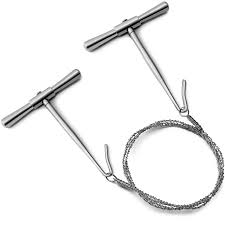

In the field of surgery, precision and efficiency are crucial. One instrument that has stood the test of time for its simplicity and effectiveness is the Gigli wire. Known for its versatility and reliability, the Gigli wire plays a critical role in orthopedic, dental, and general surgical procedures. This blog explores what a Gigli wire is, its applications, benefits, and tips for proper use, along with a detailed FAQ to answer common questions.
What is a Gigli Wire?
A Gigli wire is a flexible surgical wire primarily used for cutting through bone. Invented by Dr. Leonardo Gigli in the late 19th century, it has become a standard tool in surgeries requiring precision bone removal. The wire is usually made from high-quality stainless steel, ensuring durability and resistance to corrosion. Its flexible design allows it to be maneuvered around bones in areas where traditional saws cannot reach.
The wire consists of:
-
Braided steel wire strands that provide strength and cutting ability
-
Handles or loops at each end for the surgeon to pull back and forth
-
Optional serrated edges on some wires for more efficient cutting
Applications of Gigli Wire
Gigli wire is used in several medical specialties due to its precision and minimally invasive approach. Common applications include:
1. Orthopedic Surgery
-
Amputations: Gigli wires are commonly used in limb amputations to cut bone cleanly and safely.
-
Osteotomies: Surgical cutting of bone for deformity corrections.
-
Resections: Removal of bone tumors or damaged segments.
2. Dental and Maxillofacial Surgery
-
Used in mandibular or maxillary osteotomies to cut jawbones precisely.
-
Helpful in reconstructive surgeries where minimal tissue damage is critical.
3. Neurosurgery
-
Can be used to remove bone segments during cranial procedures.
4. Veterinary Surgery
-
Frequently used in animal amputations or orthopedic corrections, demonstrating its versatility across species.
Advantages of Using Gigli Wire
-
Precision: Allows surgeons to make accurate bone cuts with minimal tissue trauma.
-
Flexibility: Can be maneuvered around bones in hard-to-reach areas.
-
Minimal Equipment Required: Unlike powered saws, it doesn’t require electricity or complex machinery.
-
Portability: Easy to carry and sterilize, making it suitable for field or emergency use.
-
Cost-Effective: A simple, reusable instrument that reduces overall surgical costs.
How Gigli Wire Works
The operation of a Gigli wire is straightforward but requires proper technique:
-
Positioning: The wire is looped around the bone to be cut.
-
Handle Placement: The ends of the wire are attached to handles or loops.
-
Sawing Motion: The surgeon uses a back-and-forth sawing motion, letting the wire gradually cut through the bone.
-
Completion: Once the bone is cut, the wire is removed, and the procedure continues.
Because of its design, a Gigli wire can make clean, controlled cuts without causing excessive heat or damage to surrounding tissues.
Types of Gigli Wires
There are several variations of Gigli wires to suit different surgical needs:
-
Standard Gigli Wire: The most common type used in amputations and orthopedic surgeries.
-
Serrated Gigli Wire: Features tiny serrations for faster and easier bone cutting.
-
Sterile Pre-Packaged Wires: Ready-to-use single-use wires that reduce infection risk.
-
Flexible vs. Rigid Handles: Some wires come with flexible handles for easier maneuvering around tight spaces.
Care and Maintenance
Proper maintenance of Gigli wires is essential to ensure safety, durability, and effectiveness:
-
Sterilization: Autoclave the wire before and after use to maintain hygiene.
-
Inspection: Check for kinks, rust, or fraying before each procedure.
-
Storage: Keep in a dry, sterile environment to prevent corrosion.
-
Replacement: Discard wires that show signs of wear to avoid surgical complications.
Safety Tips
-
Always use proper protective equipment, including gloves and eye protection.
-
Ensure adequate bone exposure before using the wire to prevent injury to surrounding tissues.
-
Avoid excessive force; let the wire do the cutting gradually.
-
Use assistants or clamps to stabilize the bone if necessary.
Advantages Over Other Bone-Cutting Methods
While powered saws and oscillating instruments are also used in modern surgery, Gigli wires remain popular for several reasons:
-
No need for electricity or batteries, making it ideal for field surgeries or remote locations.
-
Reduced noise and vibration, which is more comfortable for patients.
-
Lower risk of accidental soft tissue damage compared to mechanical saws.
-
Highly portable and lightweight, easy to sterilize and store.
Common Misconceptions
-
Gigli wires are outdated: Despite being over a century old, they are still used worldwide because of their simplicity, reliability, and precision.
-
They can’t cut thick bones: With the right technique and repeated motion, even dense bones can be cut effectively.
-
Only used in amputations: They are versatile and used in orthopedic, dental, neurosurgical, and veterinary procedures.
FAQ: Gigli Wire
1. What is a Gigli wire used for?
Gigli wires are primarily used for cutting bones in orthopedic, dental, neurosurgical, and veterinary procedures.
2. Who invented the Gigli wire?
The wire was invented by Dr. Leonardo Gigli, an Italian surgeon, in the late 19th century.
3. What materials are Gigli wires made from?
They are usually made from high-quality stainless steel to provide strength, flexibility, and corrosion resistance.
4. Are Gigli wires reusable?
Yes, many Gigli wires are reusable after proper sterilization, although some modern versions are single-use for infection control.
5. How does a Gigli wire differ from a surgical saw?
Unlike powered saws, the Gigli wire is manual, flexible, and portable, making it suitable for areas where power tools are impractical.
6. Can Gigli wires be used in dental surgery?
Yes, they are frequently used for jaw osteotomies and other maxillofacial procedures.
7. How do you maintain a Gigli wire?
-
Sterilize before and after use
-
Store in a dry, sterile place
-
Inspect regularly for wear or rust
-
Replace if frayed or damaged
8. Are Gigli wires safe?
Yes, when used correctly by trained professionals. Proper technique, stabilization, and protective measures are essential to avoid complications.
9. Can they cut thick bones?
Yes, with a steady back-and-forth motion, even dense bones can be cut efficiently.
10. Where can I buy Gigli wires?
They are available from medical equipment suppliers, online surgical stores, and hospital supply companies.
Conclusion
The Gigli wire is a timeless surgical instrument valued for its simplicity, precision, and versatility. From orthopedic amputations to delicate dental surgeries, it continues to be a reliable choice for surgeons worldwide. Proper use, maintenance, and understanding of its applications ensure optimal performance and patient safety.
Whether you are a medical professional, a student in surgical training, or a veterinary surgeon, the Gigli wire remains an essential tool in your surgical toolkit.