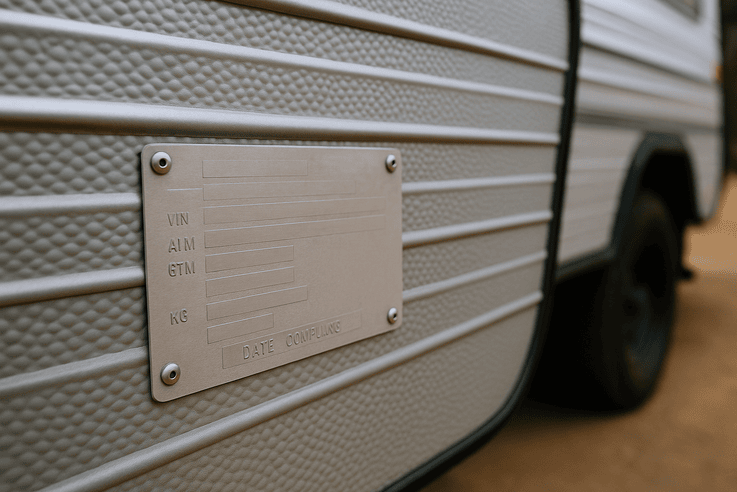

Australia’s love affair with caravanning continues to grow, with thousands of owners upgrading and modifying their rigs to suit new adventures. Whether it’s adding solar panels, extending the chassis, or installing upgraded brakes, these improvements often change a caravan’s specifications. What many travelers don’t realize is that these changes may require an updated caravan compliance plate to remain legal on the road. Understanding why and when to update your plate is essential to ensuring safety, compliance, and peace of mind during your travels.
What Is a Caravan Compliance Plate?
A caravan compliance plate is a small but critical identification label that tells you everything about your caravan’s legal and structural details. It includes information such as the manufacturer’s name, Vehicle Identification Number (VIN), Aggregate Trailer Mass (ATM), Gross Trailer Mass (GTM), and Tare weight. These figures define how much your caravan may legally carry and tow.
For caravans built or registered in Australia, this plate confirms compliance with national safety standards set under the Australian Design Rules (ADR). Essentially, it acts as the caravan’s passport—proof that it’s safe and approved for use on public roads. If you’re planning a trip across state lines or thinking of selling your caravan, an accurate and legible compliance plate is non-negotiable.
For more background on safe vehicle standards, you may find this related article helpful: Understanding Vehicle Standards for Road Safety in Australia.
Why Modifications May Affect Your Compliance Plate
Caravan owners love customization—larger water tanks, off-road suspensions, solar systems, and interior redesigns are all common upgrades. However, many of these modifications alter the weight, balance, and design characteristics of your caravan. Even small changes can affect towing performance or exceed the limits originally specified on your caravan compliance plate.
Let’s say you add a heavier kitchen setup or increase your payload capacity. If the new Aggregate Trailer Mass (ATM) or Gross Vehicle Mass (GVM) surpasses the original design limits, the caravan must undergo re-certification. Continuing to use it with the old compliance details may lead to fines or voided insurance.
Different states have varying regulations, but most follow the Australian Design Rules as their benchmark. To stay compliant, it’s recommended to seek professional advice from a qualified vehicle engineer whenever you make significant modifications to your caravan.
The Process of Updating a Caravan Compliance Plate
Updating your caravan compliance plate after a modification isn’t just a paperwork formality—it’s a legal requirement. The process generally includes three main stages:
- Professional Assessment
A licensed automotive or mechanical engineer inspects the modifications. This includes checking that the alterations comply with ADR and state transport regulations. - Certification and Documentation
Once verified, the engineer provides a certificate confirming that the caravan remains structurally sound and compliant. This report forms the foundation for the new compliance plate details. - Issuance and Installation
A new compliance plate is created with updated information, such as revised mass limits or manufacturer details. It’s then attached securely to your caravan by a professional to ensure durability and accuracy.
For accurate certification and legal installation, many caravan owners rely on expert services such as caravan compliance plate installation. Stewart & Sons Engineering, based in Bundaberg, has decades of experience handling engineering certification, GVM upgrades, and caravan plate services in accordance with Queensland Department of Transport standards.
To further understand why professional oversight is critical, check out Why Professional Certification Matters in Vehicle Modifications.
Common Mistakes Caravan Owners Make
A surprising number of caravan owners assume that modifications are minor enough not to require any official updates. This misunderstanding can lead to serious consequences. Below are some of the most frequent mistakes seen across Australia:
- DIY modifications without inspection: Adding accessories or altering structural elements without professional evaluation may breach ADR standards.
- Ignoring mass changes: Overlooking the effect of extra weight from new fittings or tanks can cause the van to exceed its legal limits.
- Using outdated plates: Some owners continue to travel with the original plate even after substantial upgrades, leaving them vulnerable to fines or insurance rejections.
Keeping your caravan compliance plate accurate ensures you’re covered by insurance and minimizes the risk of mechanical failure due to overloading.
How Often Should You Check or Replace Your Compliance Plate?
Even if your caravan hasn’t been modified recently, it’s good practice to check the plate’s legibility and relevance at least once a year. Exposure to sunlight, salt, and dust can fade or corrode metal plates, making them unreadable. During annual servicing or pre-trip checks, inspect the plate for damage.
If your caravan undergoes an accident, repainting, or frame restoration, verify that the plate details still match the current structure and specifications. Replacement plates may be required if the original has worn out, especially when planning interstate travel or re-registration.
The Benefits of Staying Compliant
Maintaining an accurate caravan compliance plate offers more than just peace of mind. It can increase the resale value of your caravan since buyers know it meets current legal and engineering standards. Updated compliance also simplifies future registration renewals and insurance processing. Most importantly, it ensures that your caravan remains roadworthy—keeping you, your passengers, and fellow travelers safe on Australian roads.
Being proactive with compliance may save you from costly issues later. A small oversight, like ignoring weight changes, can lead to significant mechanical wear or legal complications. Always treat your compliance plate as a vital component of your caravan’s identity.
Conclusion
Your caravan compliance plate is more than a simple label—it’s the foundation of your caravan’s legal identity and safety certification. Any time you modify or upgrade your setup, updating this plate is essential to ensure ongoing compliance. Professional services like Stewart & Sons Engineering provide accurate assessment and certified caravan compliance plate installation, ensuring your caravan remains fully road-legal and safe to travel anywhere in Australia.
Before your next big trip, make compliance a part of your pre-departure checklist. It’s one of the smartest investments you can make for safety, legality, and long-term value.