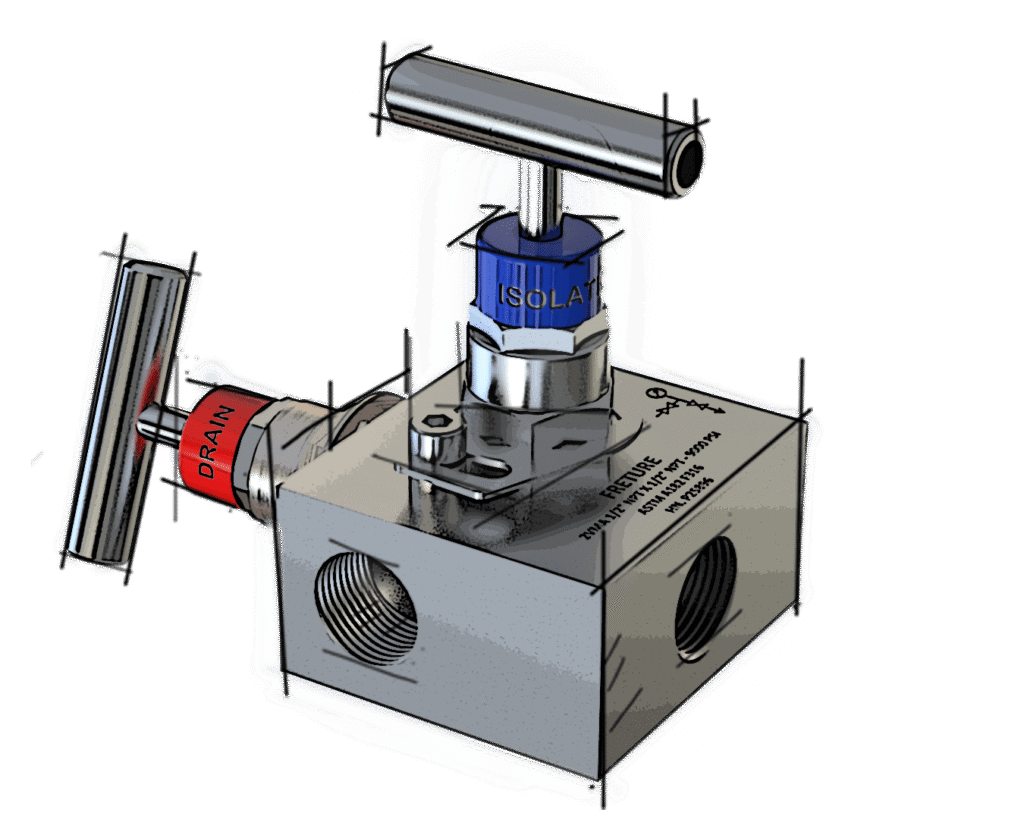

When it comes to pressure instrumentation systems, selecting the right valve configuration is just as important as choosing the right manufacturer. Leading manifold valve manufacturers offer different types of valves, each designed for specific applications. Understanding these options can help industries improve efficiency, safety, and accuracy.
Understanding the Role of Manifold Valves
A manifold valve is designed to simplify complex pressure systems by integrating multiple valves into a single compact unit. It allows operators to:
- Isolate pressure instruments
- Equalize pressure between lines
- Vent or drain trapped pressure
This makes manifold valves essential in industries where precise pressure measurement is critical.
Types of Manifold Valves
1. 2-Way Manifold Valve
A 2-way manifold valve consists of one inlet and one outlet valve. It is primarily used for basic isolation applications, where the main goal is to control or shut off pressure flow.
Applications:
- Pressure gauge isolation
- Simple process control systems
2. 3-Way Manifold Valve
A 3-way manifold valve includes two isolation valves and one equalizing valve. It is widely used in differential pressure transmitter systems.
Key Benefits:
- Allows pressure balancing during calibration
- Improves measurement accuracy
- Enhances safety during maintenance
3. 5-Way Manifold Valve
A 5-way manifold valve offers advanced functionality with two isolation valves, two vent valves, and one equalizing valve.
Applications:
- Complex instrumentation systems
- Calibration and testing setups
- High-precision pressure measurement
Why Manufacturer Quality Matters
Not all manifold valve manufacturers deliver the same level of performance. Poor-quality valves can lead to:
- Leakage and pressure loss
- Inaccurate readings
- Increased maintenance costs
- Equipment damage
Top manufacturers focus on precision engineering, high-quality materials, and strict testing procedures to ensure reliability.
Key Features to Look For
When selecting a manifold valve manufacturer in India, consider the following technical features:
- Pressure ratings from Class 150 to Class 2500
- Compliance with ASME, ISO, and API standards
- Bubble-tight shutoff for zero leakage
- Corrosion-resistant materials
- Compact and maintenance-friendly design
These features ensure long-term performance in demanding industrial environments.
Industry Applications
Different manifold valve configurations are used across various industries:
- Oil & Gas: Pipeline monitoring and control
- Chemical Industry: Handling corrosive fluids
- Power Plants: Steam and pressure control systems
- Pharmaceuticals: Clean and precise operations
Each application requires a specific valve type, making it essential to work with experienced manifold valve manufacturers.
Choosing the Right Valve Configuration
Selecting the right valve depends on your application:
- Use 2-way valves for simple isolation
- Use 3-way valves for differential pressure systems
- Use 5-way valves for advanced control and calibration
A knowledgeable manufacturer can guide you in selecting the most suitable solution.
Conclusion
Understanding the differences between 2-way, 3-way, and 5-way valves is crucial for optimizing pressure instrumentation systems. By choosing the right configuration and partnering with reliable manifold valve manufacturers, industries can ensure accurate measurement, improved safety, and efficient operations.